Beyond the Hype: A Clinical Look at Weight Loss Injections and Long-Term Outcomes
58 Views
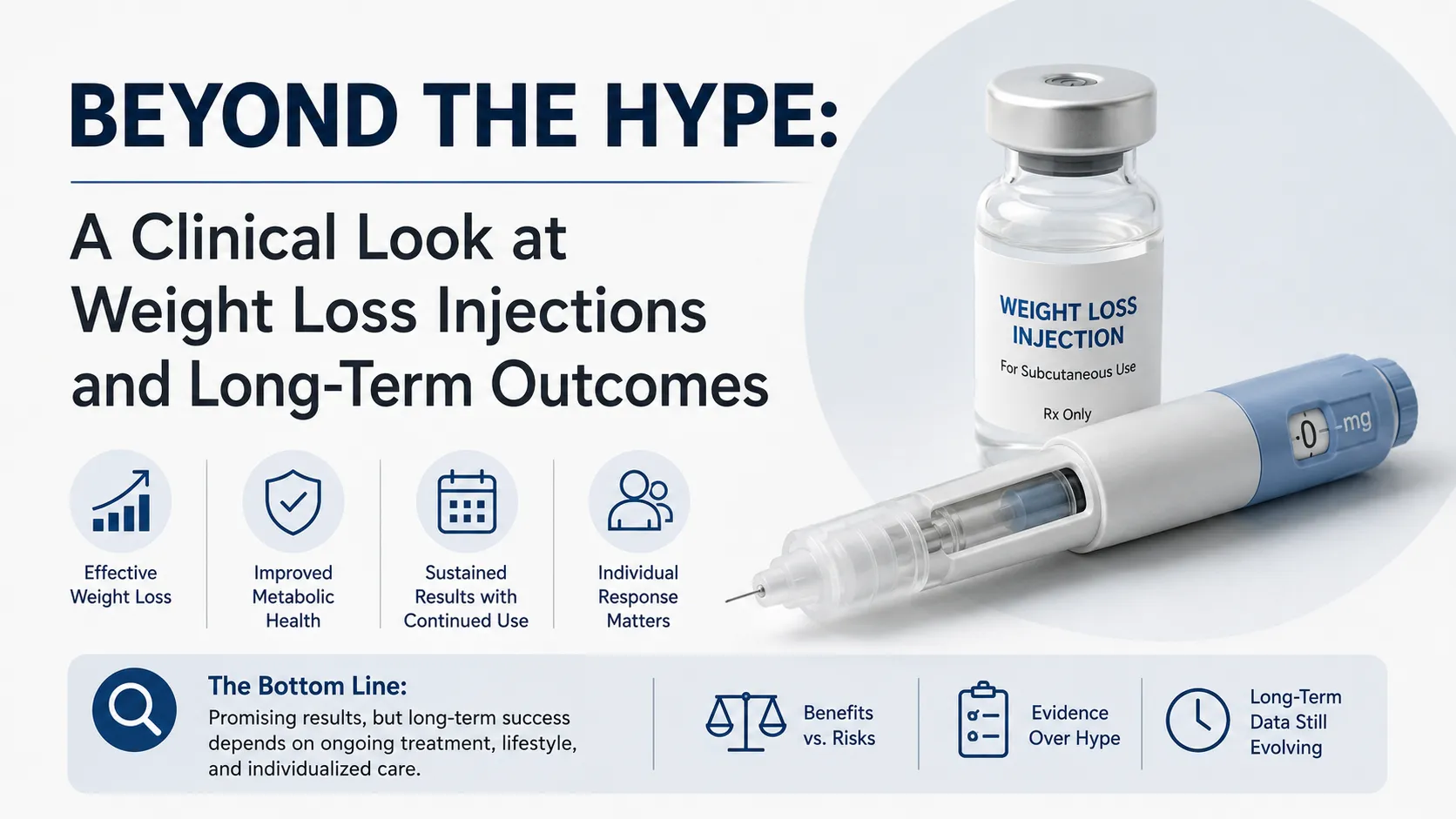
Scroll through any health feed right now and you'll see the same story on repeat: a drug that melts away weight, celebrities crediting it for their new look, and headlines that read more like marketing copy than medicine. The clinical reality is messier and, frankly, more interesting. Weight loss injections work. That much is settled. What happens after the first twelve months, though, is where the real conversation needs to start.
The Short-Term Results Are Not in Question
Trial after trial has confirmed that GLP-1 and dual-agonist injections produce meaningful weight loss, often in the range of 15 to 20 percent of body weight over 68 weeks. That's a genuine clinical breakthrough for a condition that has resisted pharmacological treatment for decades. Patients see results faster than with lifestyle changes alone, and many experience improvements in blood pressure, cholesterol, and glycemic control alongside the weight loss itself.
None of that is in dispute. Where things get more complicated is in the years that follow the headline numbers.
What Happens After the Trial Ends
Most of the data providers rely on comes from trials lasting one to two years. Real-world use often extends far longer, and that's where gaps start to show. Weight regain after discontinuation is one of the most consistent findings across multiple studies. Patients who stop treatment, whether by choice, cost, or supply issues, tend to regain a substantial portion of the weight within a year.
This isn't a failure of the drug. It's a reflection of how these medications work. GLP-1 receptor agonists suppress appetite and slow gastric emptying while they're active in the system. Once that mechanism stops, the underlying drivers of weight gain, appetite regulation, metabolic adaptation, and behavioral patterns, don't just disappear. That means providers need to frame these treatments as long-term management tools rather than a finite course, similar to how they'd discuss blood pressure medication.
Patients considering medical weight loss injections deserve that context from the outset. Setting expectations early, rather than after months of progress followed by a plateau or reversal, tends to produce better adherence and less disappointment down the line.
Side Effects Don't Disappear With Time
Short-term nausea and gastrointestinal discomfort are well known and usually improve as the body adjusts to a new dose. But longer-term users report a wider range of complaints that don't get nearly as much attention in marketing materials. Persistent digestive changes, altered bowel habits, and less commonly discussed symptoms like sulphur-smelling burps continue to affect a subset of patients well past the initial adjustment period.
Guides addressing Mounjaro Diarrhoea and Sulphur Burps exist because these symptoms are common enough to warrant dedicated patient education, not because they're rare edge cases. Providers who normalize these conversations, rather than treating them as awkward asides, help patients stay on treatment instead of quietly discontinuing out of embarrassment or frustration.
There's also the muscle loss question, which has picked up more attention recently. Rapid weight loss, regardless of method, tends to include a mix of fat and lean mass. For older patients or those with lower baseline muscle mass, this raises legitimate concerns about frailty and long-term physical function. Resistance training and adequate protein intake are increasingly recommended alongside injection therapy, not as an afterthought but as a core part of the treatment plan.
The Psychological Dimension Gets Overlooked
Weight loss is rarely just a physical process, and the injectable therapies haven't changed that. Patients who've spent years struggling with food relationships often describe a strange emotional adjustment when appetite suppression happens almost overnight. Some feel relief. Others describe a sense of disconnect from food that takes time to process.
Clinicians treating these patients need to watch for signs of disordered eating patterns emerging in the opposite direction, restriction that goes beyond what's medically advised, or anxiety tied to eating in general. This is a smaller but real slice of the patient population, and it's one that gets very little coverage in the broader public conversation about these drugs.
Comparing Delivery Methods Over the Long Haul
One area where long-term outcomes data is still catching up involves the choice between injectable and oral formulations. Oral options like Wegovy® Semaglutide Tablets UK have opened up treatment to patients who might otherwise avoid therapy entirely due to needle aversion. Early comparative data suggests similar efficacy trends between forms, though injectables still hold a slight edge in some studies.
What matters more clinically is adherence. A slightly less potent option that a patient actually sticks with for three years will likely outperform a marginally stronger one that gets abandoned after four months. Providers should weigh patient preference heavily when selecting a formulation, rather than defaulting to whichever option has the highest headline efficacy number.
Structured Support Changes the Trajectory
The patients who maintain results long-term tend to have one thing in common: ongoing clinical support rather than a one-time prescription. Programmes that combine medication with nutritional guidance, regular monitoring, and a plan for eventual dose adjustment or tapering produce noticeably better outcomes than medication alone.
This is part of why structured providers such as Weight Medics have built their model around continuous supervision rather than a single transaction. Weight management, especially with pharmacological support, works best as an ongoing relationship between patient and provider, not a prescription handed over and forgotten.
What Providers Should Take From This
The honest clinical picture sits somewhere between the enthusiasm of social media and the skepticism of critics who dismiss these drugs as a fad. They work. They also require long-term commitment, honest conversations about side effects, and realistic planning for what happens if a patient needs to pause or stop treatment.
Providers who engage with the full picture, not just the impressive trial results, are better positioned to guide patients toward sustainable outcomes. That means discussing regain risk before starting therapy, normalizing conversations about digestive side effects, watching for psychological shifts around eating, and building support structures that extend well beyond the initial prescription.
The hype cycle around these medications will keep evolving. The clinical responsibility to manage them well, though, stays the same regardless of what's trending this month.
Related Reading
Expert Insights: Navigating the Complex World of Home Improvement
Welcome to our in-depth exploration of Home Improvement. In an era defined by ra...
Why Home Improvement is Transforming the Global Industry Landscape
Welcome to our in-depth exploration of Home Improvement. In an era defined by ra...