Best Cantilever Rack Solutions for Long and Bulky Materials: Matching Rack to Load
By Rajeev Lath
34 Views
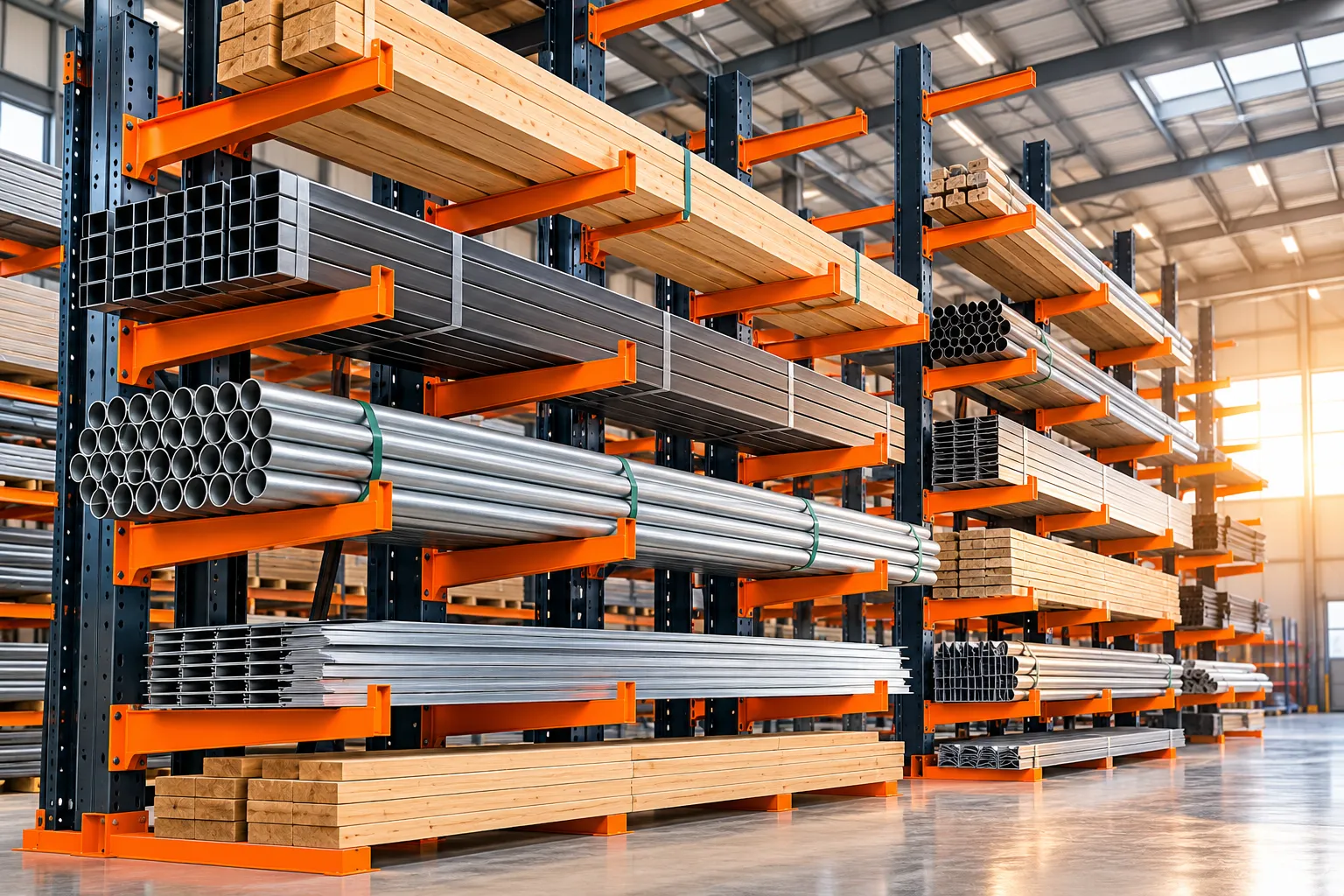
Steel bars and PVC pipes don't behave the same way once they're sitting on a rack arm, even though they both technically qualify as "long goods." One rolls if you look at it wrong. The other sags in the middle if the arms are spaced too far apart. Timber shifts under humidity in a way steel never will, and a stack of sheet metal panels can behave completely differently from a bundle of similar-length pipe, just because of how the weight is distributed across the load.
That's really the whole case for taking best cantilever rack solutions India seriously instead of treating it as "racking, but for longer stuff." The arm that's perfect for steel bars can be the wrong arm entirely for timber or sheet goods — and getting that match right is less about the rack and more about understanding the material sitting on it.
Why One Cantilever Rack Doesn't Fit All Long Goods
Most cantilever racking looks similar from a distance — an upright column, horizontal arms sticking out, no front support in the way. But the arm spacing, the tilt built into the arm, the end stop design, and even the capacity rating per arm all change depending on what's actually going to sit on it. Treating cantilever racking as one generic product is how facilities end up with pipe that rolls off during loading, or timber that bows between arms spaced too far apart for its own weight.
It helps to walk through this by material, because each one brings a different failure point to the table.
Steel Bars and Sections: Where Arm Capacity Really Gets Tested
Steel bars and structural sections are dense and heavy for their size, which means arm load capacity matters more here than almost anywhere else. A single arm might be rated anywhere from around 200 kg on a light-duty system up to well over a tonne on heavier industrial arms — and that rating assumes the load is spread evenly across the arm, not concentrated at the tip.
That distinction is worth sitting with for a second, because it's the one most buyers miss: a load resting evenly along the arm can use its full rated capacity, but the same load concentrated near the end of the arm — tip loading — can reduce the arm's effective capacity by as much as half. If your steel bars are shorter than the arm itself and tend to sit toward the front, that's a real safety consideration, not a minor technicality.
End stops matter here too, mainly to stop bundled bars from sliding forward during loading or vibration over time.
Pipes and Tubes: The Rolling Problem
Pipes bring a problem steel bars generally don't: they roll. Round stock sitting on a flat arm with nothing to stop it can shift sideways under its own weight, especially if the arm has any tilt at all — which, as it turns out, it often does on purpose.
Many cantilever arms are built with a slight upward rake, commonly around two degrees, angled back toward the upright. That's not a manufacturing imperfection — it's there specifically to keep round stock like pipe pressed back against the column instead of drifting toward the open end. Pair that with a solid end stop, and you've addressed the two main ways pipe tends to misbehave on a rack: rolling sideways and sliding forward.
Timber and Plywood: Spacing Matters More Than Capacity
Timber and plywood rarely challenge an arm's weight rating the way steel does, but they introduce a different problem: sag. Long, flat materials supported only at a few points along their length can bow between arms if those arms are spaced too far apart for the material's own stiffness — plywood sheets especially, since they flex far more than solid timber of a similar length.
The fix here isn't a heavier-duty arm. It's tighter arm spacing, sized to the specific material's rigidity rather than to a generic cantilever layout. This is one case where "bigger capacity" isn't the right answer to the trade-off — closer support points matter more than raw strength.
Sheets and Panels: Where Loading Method Changes Everything
Flat sheet goods — metal panels, laminate, large format boards — behave differently depending entirely on how they're loaded, more so than any other category here. A forklift loading from the side needs clear, unobstructed arm access without guides in the way, while a side loader or overhead crane changes both the approach angle and how the load actually makes contact with the arms.
This is where it's worth deciding on your loading method before finalizing arm design, not after. A rack designed around forklift access can genuinely get in the way of a crane-fed workflow, and the reverse is just as true.
Aluminium Profiles: Light Weight, Different Risk
Aluminium extrusions and profiles are often long and visually similar to steel sections, but they're much lighter — which shifts the main risk away from arm capacity and toward surface damage. Arm protectors, usually a rubber or polymer sleeve over the arm or end stop, matter more here than almost anywhere else, since aluminium marks and dents far more easily than steel does under the same contact pressure.
Deciding by Loading Method, Not Just Material
Material type gets you most of the way there, but how you're actually loading the rack changes the picture too:
Forklift loading generally wants clear arm access, guides at the aisle entrance to help the operator line up accurately, and arm spacing that accounts for how far a standard forklift can reach without misjudging the drop point.
Side loader loading (the type purpose-built for handling long packages, sometimes up to 12 metres in a single load) typically needs guide rails along the arms themselves, since the approach is more precise and less forgiving of misalignment than a standard forklift's.
Overhead crane loading removes the forklift-access question entirely but shifts the emphasis toward secure end stops and tilt, since the load is being lowered vertically onto the arms rather than slid in horizontally — there's less opportunity to self-correct a slightly off-center placement.
A Simple Way to Match Rack to Material
Pulling this together, the real decision tree looks something like this: if the material is dense and heavy for its length — steel bars, sections — prioritize arm capacity rating and confirm whether your load sits evenly or concentrates near the tip. If it's round and likely to roll — pipes, tubing — look for arm tilt and solid end stops before anything else. If it's flat and prone to sagging — timber, plywood — prioritize arm spacing over raw capacity. If it's sheet goods loaded by different equipment types, settle on your loading method first, since that decides the arm and guide configuration more than the material does. And if it's lightweight but surface-sensitive — aluminium — don't skip arm protectors just because the weight rating looks comfortable.
A Checklist Before You Order
 Arm capacity confirmed against evenly distributed load, not just the maximum rating
- Tip-loading scenario checked separately if your material is shorter than the arm length
- Arm tilt and end stops specified for round or roll-prone materials
- Arm spacing sized to the specific material's flex and length, not a generic layout
- Loading method (forklift, side loader, crane) decided before arm and guide design is finalized
- Rubber or polymer arm protectors specified for surface-sensitive materials like aluminium
- Guide rails or aisle entrance guides included if side loader access is part of the workflow
The Bottom Line
Cantilever racks India looks like one product category from a distance, but it really behaves like five or six different ones once you account for what's actually sitting on the arms. Steel wants capacity and tip-load awareness, pipe wants tilt and end stops, timber wants tighter spacing, sheet goods want the loading method settled first, and aluminium wants protection more than strength. Work backward from the material — and how it's actually going to get loaded — rather than picking a generic cantilever rack and hoping it fits.
Frequently Asked Questions
1. How far apart should cantilever arms be spaced for timber or plywood? Spacing should be based on the material's stiffness and length rather than a generic layout — plywood in particular needs closer arm spacing than solid timber of similar length to avoid sagging between supports.
2. What's the best cantilever rack setup for aluminium profiles? Since aluminium is lighter but more prone to surface damage, arm protectors (rubber or polymer sleeves) generally matter more than raw capacity rating.
3. Can the same cantilever rack be loaded by both forklift and overhead crane? It's possible, but the arm and guide design that suits forklift access doesn't always suit crane loading well, so it's best to settle on a primary loading method before finalizing the design.
4. What load capacity does a typical cantilever arm have? It varies widely by design, from around 200 kg on light-duty arms to well over a tonne on heavy industrial arms, so always confirm the specific rating for your intended load.
5. Why do side loaders need guide rails on cantilever racking? Side loaders, which can handle long packages precisely, rely on guide rails to help align the load accurately along the arms, since their approach is less forgiving of misalignment than a standard forklift's.
6. Is arm tilt necessary for flat materials like sheet metal or timber? Generally no — tilt is primarily useful for round, roll-prone materials, while flat goods benefit more from correct arm spacing than from tilt.
Related Reading
Top 10 Hidden Secrets About Business & Finance You Need to Know
Welcome to our in-depth exploration of Business & Finance. In an era defined...
Why Business & Finance is Transforming the Global Industry Landscape
Welcome to our in-depth exploration of Business & Finance. In an era defined...