Understanding Belimo Control Valves and Their Industrial Uses
By CG Trading
2 Views
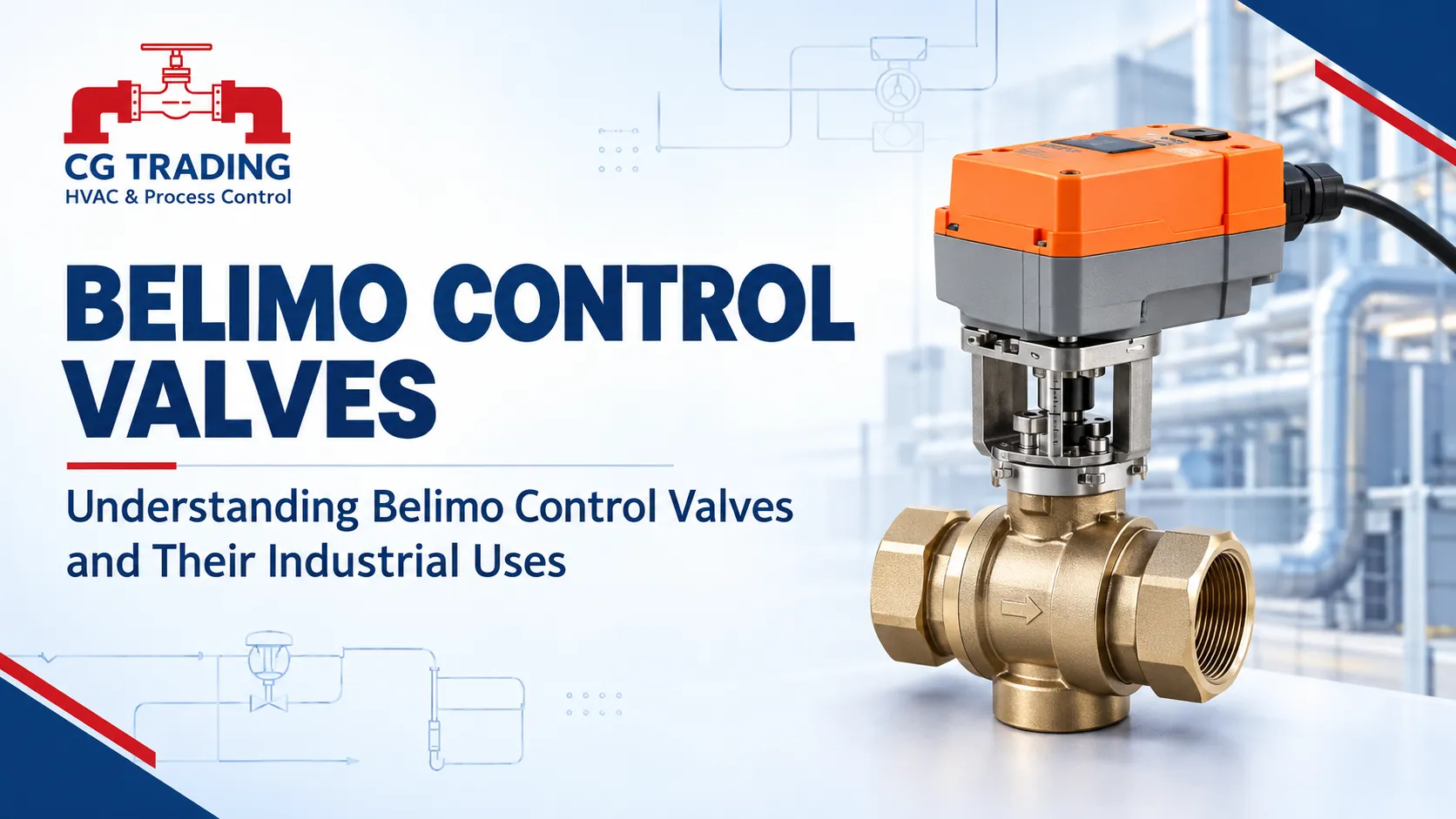
Quick Summary
A Belimo control valve regulates the flow of water or other fluids in HVAC and process systems by opening or closing in response to a controller. It helps keep temperatures steady, cuts energy use, and protects pumps and chillers. Belimo is a Swiss maker known for valves, actuators, and sensors, and its valves are popular for tight shut-off, accurate control, and energy savings. This guide explains how these valves work, the main types, where they are used, and how to choose one without costly mistakes.
Table of Contents
-
What Is a Belimo Control Valve?
-
How Does It Work?
-
Main Types of Control Valves
-
Key Benefits
-
Industrial and Commercial Uses
-
Installation Tips
-
Maintenance and Troubleshooting
-
Why Buying Genuine Matters
-
Final Thoughts
-
Frequently Asked Questions
What Is a Belimo Control Valve?
A Belimo control valve is a valve and actuator combination made by Belimo, a Swiss company that specialises in actuators, valves and sensors for heating, ventilation and air conditioning. The actuator is the small motor that turns the valve, and the valve is the part that opens or closes the water path.
Belimo valves are used in hospitals, data centres, offices, hotels, airports and many industrial buildings. They are known for these qualities:
-
Accurate flow control that follows the signal from the building controller.
-
Tight shut-off, so no water leaks through when the valve is closed.
-
Compact, ready-to-install design, with the actuator and valve matched by the maker.
-
Energy-saving options, including valves that keep the flow steady even when the pressure in the pipe changes.
-
Easy integration with building automation systems.
How Does a Belimo Control Valve Work?
The working process is simple.
-
The room or the air handling unit has a temperature sensor.
-
A controller compares the actual temperature with the set value.
-
The controller sends a signal to the actuator, usually a voltage signal such as 0 to 10 V.
-
The actuator turns the valve to a position that matches the signal.
-
The valve changes the water flow through the coil.
-
The coil gives out or takes in more or less heat, and the room temperature moves toward the set value.
This happens all day without anyone touching it. If the weather changes, or a hall fills with people, the valve adjusts on its own.
Main Types of Control Valves
Not every valve suits every job. These are the main choices.
-
Two-way valve: it opens or closes one path, and it controls how much water flows through the coil. It is the most common choice in variable-flow systems.
-
Three-way valve: it mixes or diverts water between two paths. It is used where a constant flow must be kept in the circuit.
-
Six-way valve: a single valve that handles both heating and cooling for a zone, which saves piping and space.
-
Characterised control valve: the shape of the opening is designed so that the flow changes in a smooth, predictable way, which gives stable control.
-
Pressure independent valve: it keeps the flow at the set value even when the pressure in the system changes. This removes the need for separate balancing valves in many cases.
-
Ball, globe and butterfly valves: ball valves are common for smaller pipe sizes, while globe and butterfly designs are used for larger pipe sizes.
Some advanced models also measure flow and temperature, and help to monitor the energy used by the coil.
Key Benefits of Belimo Control Valves
-
Lower energy bills: less water pumped, and better chiller performance.
-
Stable comfort: steady temperature across the building.
-
Longer equipment life: pumps and chillers face less strain.
-
Easier commissioning: matched actuator and valve save setup time.
-
Reliable shut-off: no unwanted flow in unused zones.
-
Low maintenance: the design aims for long, trouble-free operation.
-
Smart building ready: works with standard control signals and building systems.
Industrial and Commercial Uses
-
Office buildings and commercial complexes: zone-wise comfort control.
-
Hospitals: stable temperature and ventilation in wards and operation theatres.
-
Data centres: precise cooling for racks and server halls.
-
Shopping malls and airports: large systems with changing crowd levels.
-
Hotels and resorts: room-by-room temperature control.
-
Pharmaceutical plants and labs: strict temperature and humidity conditions.
-
Industrial air handling units: process areas and production halls.
-
Schools and colleges: classroom and hall air conditioning.
-
District cooling and process cooling systems: large-scale water loops.
Installation Tips
-
Flush the pipes before installing, so that dirt does not damage the valve seat.
-
Fit a strainer upstream of the valve.
-
Follow the flow direction marked on the body.
-
Install the valve with the actuator in the position allowed in the data sheet. Avoid placing the actuator under the valve where water may drip on it.
-
Leave room around the actuator for service and the manual override.
-
Use the correct cables and a proper power supply.
-
Test the full stroke, and check the feedback signal during commissioning.
-
Insulate the pipes and valve body as required, but keep the actuator free as the maker advises.
Maintenance and Troubleshooting
Belimo control valves are designed for low maintenance, but a few checks help.
-
Check strainers and clean them regularly.
-
Look for leaks at joints and the stem.
-
Check that the actuator moves smoothly and responds to the signal.
-
Use the manual override to test the valve.
-
Keep the system water clean, with proper treatment.
Common problems and quick checks:
-
Valve does not move: check the power, the signal and the wiring.
-
Valve hunts: review the controller settings and the valve size.
-
Valve leaks when closed: check for dirt in the seat, or a worn part.
-
The room does not reach the set temperature: check the sizing, the water temperature and the sensor.
Why Buying Genuine Matters
A control valve works inside a critical system for years. A fake or poorly sourced product can fail early, give poor control and damage equipment. When buying, remember these points.
-
Buy from a reliable supplier who gives you proper documents and clear product details.
-
Check the model numbers against the data sheet.
-
Ask about warranty and technical support.
-
Keep the purchase papers for future service.
Final Thoughts
A control valve is a small part with a big effect on comfort, energy cost and equipment life. Choosing the right type and size, installing it correctly and buying from a trusted source can make a building run better for many years.
If you are looking for a supplier, you can explore the Belimo control valve range offered by CG Trading, which covers HVAC uses in offices, hospitals, data centres, malls, hotels and industrial air units.
Frequently Asked Questions
Q. What is a Belimo control valve?
Ans. It is a valve and actuator combination made by Belimo, used to control the flow of hot or chilled water in HVAC and similar systems.
Q. How does a control valve work in an HVAC system?
Ans. A controller sends a signal to the actuator, which moves the valve to open or close the water path. This changes the heating or cooling given by the coil.
Q. What is the difference between a two-way and a three-way control valve?
Ans. A two-way valve controls the flow through the coil. A three-way valve mixes or diverts flow between two paths, which keeps the flow in the circuit constant.
Q. What is a pressure independent control valve?
Ans. It keeps the flow at the set value even if the pressure in the pipe changes, so the system stays balanced without extra balancing valves.
Q. Where are Belimo control valves used?
Ans. They are used in offices, hospitals, data centres, malls, hotels, airports, pharma plants, schools and industrial air handling systems.
Q. How do I size a control valve?
Ans. Use the flow rate and the allowed pressure drop to find the required Kv, and then choose a valve that fits. Confirm the result with the manufacturer or an engineer.
Q. What is a spring return actuator?
Ans. It is an actuator with a built-in spring that moves the valve to a safe position when the power is lost.
Q. How often does a control valve need maintenance?
Ans. They need little maintenance. Check strainers, test the actuator, and look for leaks at regular service visits.
Related Reading
Top 10 Hidden Secrets About Business & Finance You Need to Know
Welcome to our in-depth exploration of Business & Finance. In an era defined...
Why Business & Finance is Transforming the Global Industry Landscape
Welcome to our in-depth exploration of Business & Finance. In an era defined...