GPT-INDIA Bag Filter: How Industrial Fabric Filtration Performs Under Real Operating Conditions
By GPT India
6 Views
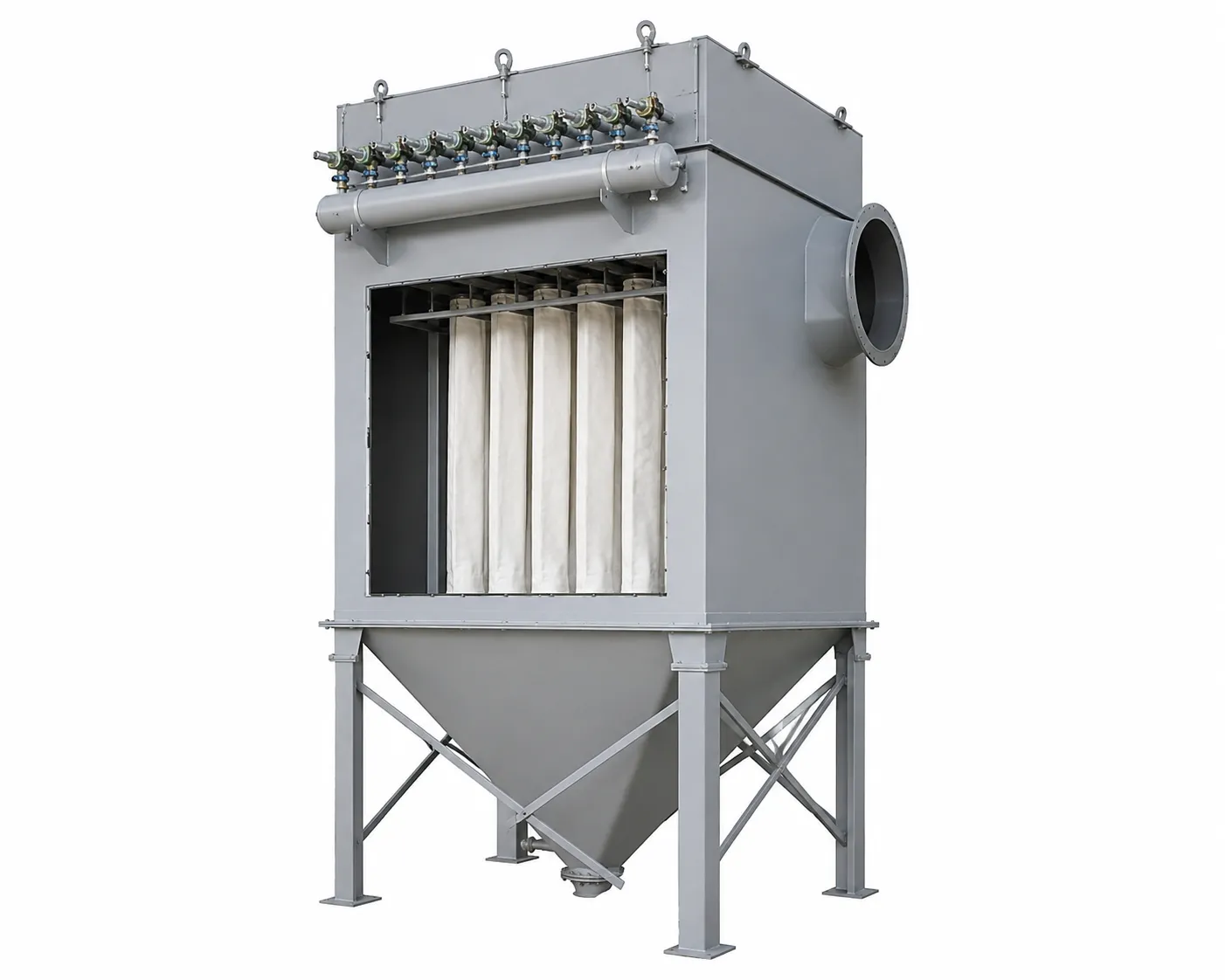
Industrial dust collection rarely takes place under perfectly stable conditions. Production rates change, raw materials vary, temperatures fluctuate, and the amount of dust entering the filtration system can rise and fall throughout the day. A filtration system that performs well in a laboratory environment must also remain dependable when exposed to these real operating variations.
A Bag Filter is widely used for controlling particulate matter from industrial exhaust and process air streams. Its basic principle is straightforward: dust-laden air passes through fabric filtration media, particles are retained, and cleaner air leaves the filtration chamber. The engineering challenge lies in keeping this process stable as dust accumulates on the filtration surface.
GPT-INDIA, a brand of Green Planet Technologies, develops industrial filtration and air pollution control solutions for different manufacturing environments. Its approach considers the complete application, including airflow, dust characteristics, temperature, filtration area, filter media, cleaning method, and dust discharge.
What Is a Bag Filter?
A Bag Filter is an industrial dust filtration system that uses fabric filter elements to separate particulate matter from an air stream.
Dust-containing air enters the collector and passes through the filter media. Particles are retained on the filtration surface while the filtered air continues through the system.
As dust accumulates, resistance across the filter can increase. A suitable cleaning mechanism is therefore required to remove accumulated material and maintain practical operating conditions.
The collected dust falls into a hopper or collection section, where it can be discharged through an appropriate arrangement.
The simplicity of fabric filtration makes it useful across many industries, but the performance depends heavily on correct design and operating conditions.
Why Dust Loading Changes Filtration Behaviour
A new filter does not necessarily behave exactly like a filter that has been operating for several hours.
As dust begins to accumulate on the fabric, a dust layer forms over the filtration surface. This layer can influence particle capture and airflow resistance.
Some dust layers can contribute to effective filtration by acting as an additional barrier for fine particles. However, excessive accumulation can increase pressure drop.
The purpose of the cleaning system is to remove enough accumulated dust to maintain the collector within its intended operating range.
Therefore, filter cleaning should not simply be understood as removing every particle from the fabric.
Pulse Jet Bag Filter Operation
A Pulse jet Bag filter uses short bursts of compressed air to clean the filter bags.
During normal filtration, dust collects on the outside or appropriate filtration surface of the bags depending on the collector configuration.
When cleaning is initiated, a rapid compressed-air pulse creates movement in the filter element. The accumulated dust is dislodged and falls toward the collection hopper.
The sequence controller determines the cleaning order and timing.
This method is particularly useful for industrial systems that need to operate continuously without taking the entire filtration chamber offline for manual cleaning.
Cleaning Frequency Matters
More cleaning does not automatically mean better filtration.
If the filter bags are cleaned too frequently, compressed-air consumption can increase and unnecessary mechanical stress may be introduced.
If cleaning is insufficient, dust accumulation can increase resistance and reduce available airflow.
The ideal cleaning strategy depends on dust loading, filtration media, airflow, pressure drop, and the characteristics of the collected material.
For this reason, pressure-drop monitoring and appropriate control settings are valuable for maintaining stable operation.
Filter Bags Are Application-Specific Components
Filter bags are not universal components that can be selected only by checking their length and diameter.
The filtration material needs to be compatible with the operating environment.
Temperature, moisture, chemical exposure, dust abrasiveness, particle size, dust concentration, and cleaning method can all influence the appropriate media.
A process handling dry mineral dust may have very different filtration requirements from a process producing warm, humid, or chemically active particulate matter.
Correct selection of Filter bags can therefore have a major influence on service life and operating performance.
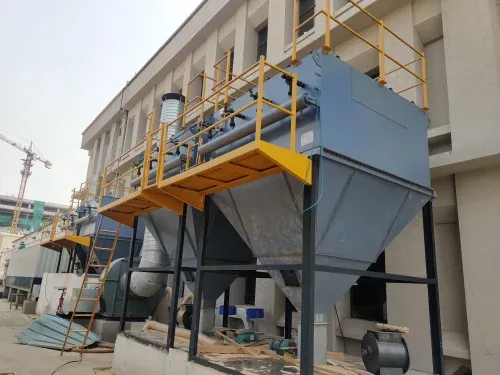
Temperature and Filter Media
Temperature is one of the first conditions that should be established when selecting filtration media.
Every filter material has operating limitations.
If the actual gas temperature is higher than the media's suitable range, premature degradation may occur. Temperature fluctuations should also be considered rather than focusing only on the normal average temperature.
For thermal and combustion-related applications, the possibility of temperature spikes can be particularly important.
A properly engineered filtration system should therefore consider normal, maximum, and abnormal operating temperatures where relevant.
Moisture Can Create Filtration Problems
Moisture can significantly change how dust behaves.
Dry powder that normally falls freely may become sticky when moisture enters the system. The dust can adhere to the filtration surface, reducing the effectiveness of normal cleaning.
Condensation can create another problem.
If the gas temperature falls below the dew point, moisture may condense inside the collector. This can cause dust blinding, corrosion, and difficult operating conditions.
For applications where moisture is possible, the system design should consider insulation, temperature control, material selection, and process conditions.
Dust Characteristics Matter More Than Appearance
Two dusts can look similar but behave differently during filtration.
Particle size, shape, density, abrasiveness, moisture content, electrical characteristics, and chemical composition can influence collection behaviour.
Fine particles may penetrate or load filtration media differently from coarse particles.
Abrasive dust can contribute to mechanical wear, while fibrous material can behave differently from dense mineral particles.
This is why Bag filter manufacturers need process information before finalising a filtration design.
Filtration Area and Air-to-Cloth Ratio
The amount of filter media available relative to the airflow is an important design consideration.
This relationship is commonly expressed through filtration velocity or air-to-cloth ratio.
If too much air is forced through too little filtration area, the filtration load can become unnecessarily high.
A suitably designed filtration area helps maintain practical pressure-drop characteristics and cleaning requirements.
The correct value depends on the dust characteristics, filtration media, cleaning method, temperature, and application.
There is no single filtration ratio that is appropriate for every industrial process.
Why Pressure Drop Should Be Monitored
Pressure drop provides an indication of resistance through the filtration system.
A gradual increase can indicate increasing dust loading or changing filter conditions.
If pressure drop remains unusually high even after cleaning, operators may need to investigate filter blinding, inadequate cleaning, moisture, or other process issues.
A sudden reduction can also require attention because it may indicate a damaged filter bag or leakage path.
Monitoring pressure drop can therefore help operators identify developing problems before they result in significant performance loss.
Fan Performance and Bag Filtration
The filtration system does not operate independently from the fan.
The fan must provide sufficient airflow while overcoming the resistance of the hood, ductwork, filtration equipment, dampers, and discharge system.
As the filter pressure drop changes, the fan's operating point can also change depending on the system arrangement.
This is why a dust collector should be evaluated as part of the complete air-handling system.
A high-capacity fan cannot compensate indefinitely for poorly designed ductwork or heavily loaded filtration media.
Why Ductwork Matters
The duct system transports contaminated air from the process to the collector.
If ductwork is undersized, poorly routed, excessively long, or contains unnecessary bends, pressure losses can increase.
Leakage can further reduce the amount of air reaching the intended extraction points.
For multiple machines, the system should be designed to maintain suitable airflow at each required pickup point.
Good duct design can therefore support the performance of the Bag Filter while also helping control fan energy requirements.
Dust Hopper and Discharge System
Once particles are removed from the air stream, they need to be collected and discharged.
The hopper should have sufficient capacity for the expected dust load.
The discharge mechanism must also prevent excessive accumulation beneath the filter chamber.
If collected dust remains in the hopper for too long, it can create operational problems and, in certain arrangements, may interfere with the normal dust-removal process.
Depending on the application, rotary air locks, screw conveyors, double-dump valves, or other discharge arrangements may be used.
Role of Rotary Air Lock
A Rotary Air lock can be used in suitable dust collection systems to discharge collected material while helping maintain the pressure boundary between the hopper and the downstream collection arrangement.
Its selection should consider dust characteristics, throughput, pressure conditions, and required sealing performance.
The discharge equipment is an important part of the overall dust collector.
Even an efficient filtration chamber can experience operational problems if collected dust cannot be removed reliably.
Bag Filter in Different Industries
Fabric filtration is used across a wide range of industrial processes.
Cement and mineral-processing plants can generate substantial particulate matter during crushing, grinding, conveying, and material transfer.
Foundries and metalworking facilities may require dust control around furnaces, casting, grinding, and finishing operations.
Other applications can include chemicals, fertilizer, pharmaceuticals, ceramics, food processing, agro industries, plastics, rubber, recycling, woodworking, and general manufacturing.
Each application has different process conditions, so filtration design should be adapted accordingly.
Bag Filter for Continuous Production
Continuous production places additional importance on reliability.
A filtration system may need to operate for long periods with limited opportunities for shutdown.
Automatic cleaning, reliable compressed-air supply, suitable filter media, accessible inspection points, and practical dust discharge can all contribute to operational continuity.
Maintenance planning is equally important.
Waiting until filtration performance has significantly deteriorated can result in unnecessary downtime.
A preventive approach allows operators to monitor pressure drop, cleaning performance, filter condition, and dust discharge before major problems develop.
Choosing Bag Filter Manufacturers
When evaluating Bag filter manufacturers, buyers should look beyond equipment size and quoted airflow.
A manufacturer should understand the actual process and be able to evaluate dust characteristics, filtration media, airflow, temperature, pressure drop, cleaning requirements, and dust discharge.
Manufacturing quality also matters.
Proper sealing, structural strength, filter-bag support, access doors, internal components, and hopper construction influence long-term reliability.
A technically sound design combined with consistent fabrication can provide a stronger foundation for industrial operation.
Choosing Bag Filter Suppliers
Bag filter suppliers can support both new installations and replacement requirements.
When purchasing equipment or components, customers should verify whether the proposed solution matches their existing system.
For replacement requirements, dimensions alone are not enough.
The filter media, construction, attachment method, operating temperature, cleaning system, and dust characteristics should also be checked.
Working with a supplier that understands the application can reduce the risk of selecting unsuitable components.
Filter Bags Suppliers and Replacement Requirements
Filter bags suppliers play an important role in maintaining filtration equipment over its operating life.
Replacement bags should be selected according to the original collector design and current process conditions.
If production has changed since the collector was installed, the original bag specification may not necessarily remain ideal.
Changes in temperature, raw materials, production volume, moisture, or dust characteristics can affect filtration requirements.
A technical review can therefore be valuable when replacing large quantities of filter bags.
Working With Filter Bags Manufacturers
Filter bags manufacturers may produce bags in different materials, dimensions, constructions, and attachment configurations.
For industrial collectors, consistency across a large number of bags is important.
Incorrect dimensions can create fitting problems, while unsuitable materials can reduce service life.
The manufacturing process should therefore maintain dimensional accuracy and consistent construction.
This becomes particularly important for large collectors containing hundreds or thousands of filter elements.
Lifecycle Cost of Bag Filtration
The purchase price is only one part of the cost of a filtration system.
Electricity consumption, compressed-air consumption, filter-bag replacement, maintenance labour, downtime, dust-disposal requirements, and spare-parts availability can all influence the total cost of ownership.
A system that appears inexpensive initially may become costly if its filter bags have a short service life or if it operates with unnecessarily high pressure losses.
Industrial buyers should therefore evaluate the expected operating conditions over the life of the equipment.
GPT-INDIA Industrial Bag Filtration Solutions
GPT-INDIA, a brand of Green Planet Technologies, develops industrial dust collection and air pollution control solutions for manufacturing and processing facilities.
Its product range includes Bag Filters, Pulse Jet Bag Filters, Filter Bags, Dust Collectors, Cyclone and Multicyclone Dust Collectors, Wood Dust Collectors, Portable Dust Collectors, BIBO Dust Collectors, Wet Scrubbers, Fume Exhaust Systems, Activated Carbon Filters, Paint Booths, Air Washer Systems, Axial Flow Fans, Centrifugal Blowers, and Rotary Air Locks.
GPT-INDIA's manufacturing facilities associated with New Delhi and Sahibabad support the development of industrial filtration and pollution-control equipment for different applications.
For businesses comparing Bag filter manufacturers, Bag filter suppliers, Filter bags suppliers, or Filter bags manufacturers, the most useful approach is to evaluate the entire operating system rather than considering the filter element alone.
GPT-INDIA Contact Details
Green Planet Technologies, popularly known as GPT-INDIA, provides industrial filtration, dust collection, ventilation, and air pollution control solutions.
Manufacturing Unit: 59/2/1, Site 4, Industrial Area, Sahibabad, Distt. Ghaziabad-201010, Uttar Pradesh, India.
Phone: +91-9773500660
Email: info@gpt-india.com
Website: gptindia.in
Industrial customers can discuss dust type, airflow, operating temperature, filtration media, dust concentration, cleaning requirements, and equipment configuration with the GPT-INDIA technical team.
Frequently Asked Questions
What is a Bag Filter used for?
A Bag Filter is used to separate particulate matter from industrial exhaust or process air using fabric filtration media.
How does a Pulse jet Bag filter clean its filter bags?
It uses short compressed-air pulses to dislodge accumulated dust from the filter bags. The detached material falls toward the collection hopper.
How should Filter bags be selected?
Filter bags should be selected according to dust characteristics, temperature, moisture, chemical exposure, filtration requirements, cleaning method, dimensions, and the collector's construction.
Why does pressure drop increase in a bag filter?
Pressure drop can increase because of dust accumulation, inadequate cleaning, unsuitable filter media, moisture, excessive dust loading, or other operating conditions.
How do I choose Bag filter manufacturers?
Evaluate their application-engineering capability, filtration knowledge, manufacturing quality, customisation, technical support, replacement availability, and experience with similar industrial processes.
What should I check when selecting Filter bags suppliers?
Check whether the supplier can provide compatible dimensions, suitable filtration media, correct attachment arrangements, consistent manufacturing quality, and technical support for the application.
Are Filter bags manufacturers important for customised requirements?
Yes. Custom dimensions, filtration materials, attachment configurations, and application-specific requirements may require manufacturing capabilities beyond standard replacement bags.
Can GPT-INDIA provide customised bag filtration solutions?
Yes. GPT-INDIA develops industrial bag filtration and dust collection systems according to process conditions, airflow, dust characteristics, temperature, filtration requirements, and site conditions.
Conclusion
A Bag Filter is much more than a chamber containing fabric bags. Its performance depends on the interaction between filtration media, airflow, dust loading, cleaning, pressure drop, fan operation, ductwork, and dust discharge.
A Pulse jet Bag filter can support continuous industrial operation by automatically cleaning accumulated dust, while the correct Filter bags help maintain suitable filtration conditions under the actual process environment.
For industrial buyers, selecting the right Bag filter manufacturers, Bag filter suppliers, Filter bags suppliers, or Filter bags manufacturers should involve more than comparing prices. Application knowledge, filtration-media compatibility, manufacturing quality, maintenance requirements, and long-term operating cost all deserve consideration.
GPT-INDIA develops industrial filtration solutions with the aim of matching dust-control equipment to real production conditions, helping industries maintain practical and reliable particulate-control systems over their operating life.
Related Reading
Top 10 Hidden Secrets About Business & Finance You Need to Know
Welcome to our in-depth exploration of Business & Finance. In an era defined...
Why Business & Finance is Transforming the Global Industry Landscape
Welcome to our in-depth exploration of Business & Finance. In an era defined...