Assistant Teacher Course Online vs Traditional Classroom Training: Which Is Better?
83 Views
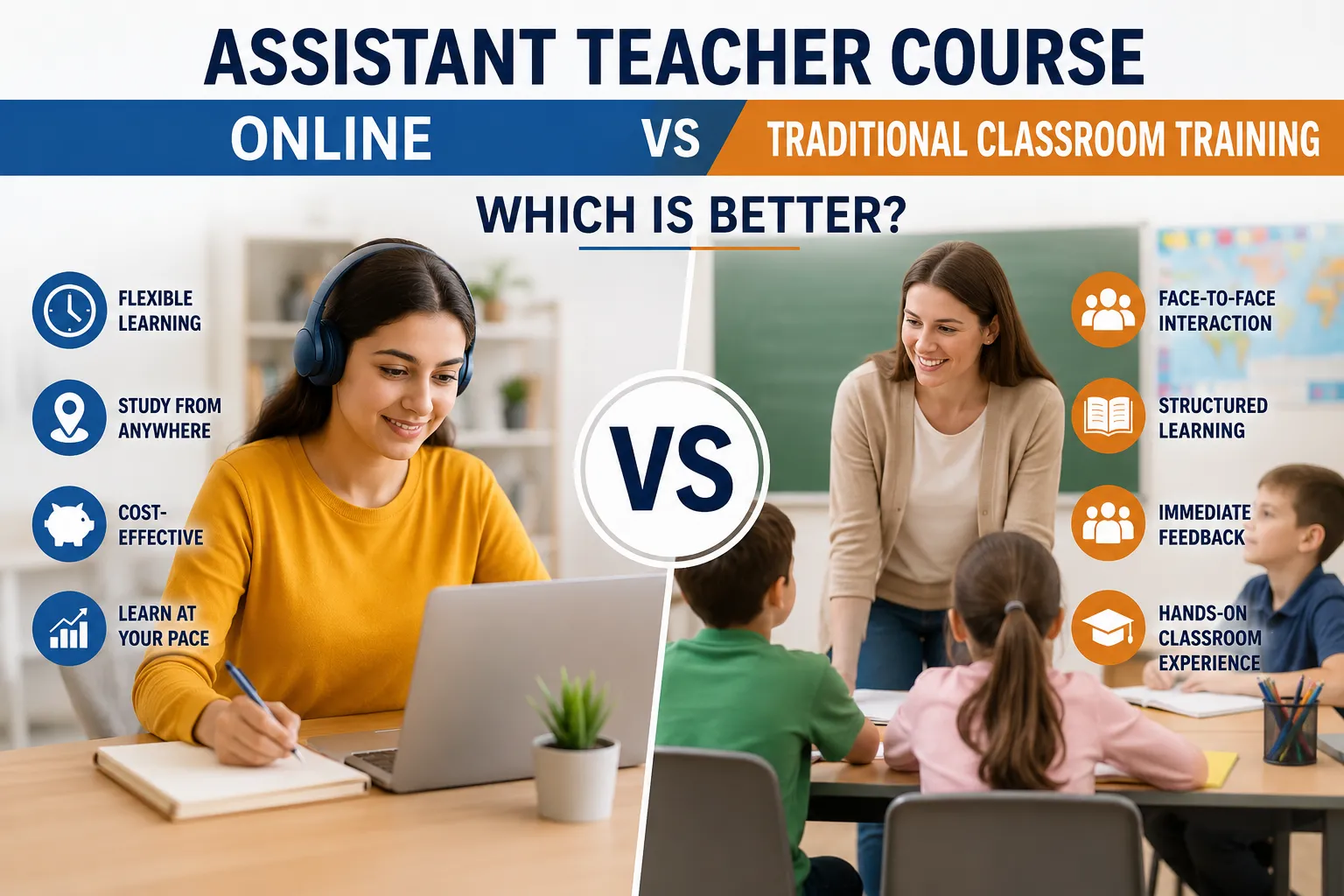
If you're planning to build a career in education support, one of the first decisions you'll face is choosing between online learning and traditional classroom-based training. Both options can help you develop the skills and knowledge needed to support teachers and students effectively, but they offer very different learning experiences.
With advances in digital education, more learners are considering flexible study options. At the same time, classroom training continues to appeal to those who prefer face-to-face interaction. Understanding the strengths and limitations of each approach can help you choose the path that best suits your goals, schedule, and learning style.
In this guide, we'll compare an assistant teacher course online with traditional classroom training to help you determine which option may be the better fit for your future.
Understanding the Role of an Assistant Teacher
Assistant teachers play an important role in supporting classroom learning. They work alongside teachers to help students stay engaged, assist with lesson preparation, provide individual support, and contribute to a positive learning environment.
To perform these responsibilities effectively, assistant teachers need a range of skills, including communication, classroom management, child development awareness, and safeguarding knowledge. Quality training helps learners gain these essential competencies before entering educational settings.
What Is Online Assistant Teacher Training?
Online training allows learners to study course materials through a digital platform from any location with internet access. Lessons, assessments, and resources are typically available around the clock, enabling students to learn at their own pace.
Many learners choose an assistant teacher course online because it offers flexibility and convenience. Rather than attending classes at fixed times, students can fit learning around work, family commitments, or other responsibilities.
This learning model has become increasingly popular among adults seeking career changes or professional development opportunities.
What Is Traditional Classroom Training?
Traditional classroom training involves attending scheduled sessions in person. Students learn in a physical classroom environment where instructors deliver lessons directly and interact with learners face to face.
Classroom-based learning often follows a structured timetable. Students attend lectures, participate in group activities, and complete assessments under the guidance of tutors.
For some learners, the physical classroom environment provides motivation and a sense of routine that supports consistent progress.
Comparing Flexibility
One of the biggest differences between online and classroom learning is flexibility.
Online courses allow students to decide when and where they study. This is particularly beneficial for individuals balancing employment, childcare, or other commitments. Learners can access study materials during evenings, weekends, or whenever it suits their schedule.
Traditional classroom training requires attendance at specific times and locations. While this structure can be helpful for some students, it may be challenging for those with busy lifestyles.
For flexibility alone, online learning is often the preferred option.
Comparing Accessibility
Accessibility is another important consideration.
Online learning removes geographical barriers. Students can access course materials from virtually anywhere without needing to travel. This can save both time and money while making education more accessible to a wider audience.
Classroom-based training may require commuting, parking expenses, or public transportation. In some areas, suitable training providers may also be limited.
Because of these advantages, many aspiring teaching assistants find online study more convenient and practical.
Comparing Learning Styles
Every learner has a unique learning style.
Online learning works well for self-motivated individuals who enjoy independent study. Students can revisit lessons, pause videos, and review resources as often as needed. This personalized approach allows learners to progress at a comfortable pace.
Classroom training benefits learners who thrive in interactive environments. Immediate access to instructors and peer discussions can help reinforce understanding and encourage participation.
Neither method is inherently better. The most effective choice depends on how you learn best.
Comparing Costs
Cost is often a significant factor when selecting a course.
Online programs generally have lower overhead costs because there is no need for physical classrooms or on-site facilities. As a result, many online courses are competitively priced.
Students may also save money on transportation, accommodation, and daily travel expenses.
Traditional classroom training can involve additional costs beyond tuition fees. These expenses may include commuting, parking, meals, and learning materials.
For budget-conscious learners, online training often represents a cost-effective solution.
Comparing Support and Interaction
A common concern about online learning is whether students receive enough support.
Modern online learning platforms offer various forms of assistance, including tutor guidance, email support, discussion forums, and interactive resources. Reputable providers ensure learners have access to help whenever they need it.
Classroom environments provide face-to-face interaction, which some students find reassuring. Direct communication with tutors and classmates can foster collaboration and build confidence.
However, technology has significantly improved online communication, reducing the gap between virtual and in-person learning experiences.
Career Outcomes
An important question many learners ask is whether employers value online qualifications.
The answer largely depends on the quality and credibility of the training provider rather than the method of delivery. Employers are typically interested in the knowledge, skills, and competencies candidates possess.
A recognised assistant teacher course online can provide the same foundational knowledge as traditional classroom training when delivered by an established provider.
As long as the course meets industry expectations and develops practical skills, learners can confidently pursue career opportunities in educational settings.
Which Option Is Better?
There is no universal answer because every learner's circumstances are different.
Online learning may be ideal if you:
- Need flexibility around work or family commitments
- Prefer self-paced study
- Want to avoid commuting
- Are looking for a cost-effective learning solution
Traditional classroom training may be better if you:
- Prefer face-to-face interaction
- Learn best in structured environments
- Enjoy group discussions and classroom activities
- Benefit from direct supervision and immediate feedback
Many modern learners find that online study provides the flexibility and accessibility needed to achieve their goals without disrupting existing responsibilities.
At UK Open College, we understand the importance of flexible learning opportunities that fit around busy lifestyles. Our courses are designed to help learners develop valuable skills while studying at a pace that works for them.
Whether you choose online learning or classroom-based education, the key is selecting a programme that supports your career ambitions and provides high-quality training. UK Open College remains committed to helping learners access education that prepares them for rewarding opportunities in the education sector.
Conclusion
Both online and traditional classroom training offer valuable pathways into education support roles. Classroom learning provides structured, face-to-face instruction, while online study offers flexibility, convenience, and accessibility.
The right choice depends on your personal circumstances, preferred learning style, and career objectives. By carefully evaluating your needs, you can select the learning format that best supports your success and helps you move confidently toward a rewarding future in education.
FAQs
1. Is online assistant teacher training recognised by employers?
Yes, employers generally value qualifications from reputable training providers that deliver relevant knowledge and skills.
2. Can I study while working full-time?
Yes. Online courses are often designed to accommodate working professionals and busy learners.
3. How long does assistant teacher training usually take?
Course duration varies depending on the provider, qualification level, and individual study pace.
4. Do online courses provide tutor support?
Many online providers offer tutor guidance, learner support, and access to educational resources throughout the course.
5. Which learning method is better for beginners?
Both methods can be effective. Beginners should choose the option that aligns best with their learning preferences, schedule, and personal circumstances.
Related Reading
Expert Insights: Navigating the Complex World of Education & Learning
Welcome to our in-depth exploration of Education & Learning. In an era defin...
Why Education & Learning is Transforming the Global Industry Landscape
Welcome to our in-depth exploration of Education & Learning. In an era defin...