Are Blast Valves Waterproof and Rust-Resistant?
99 Views
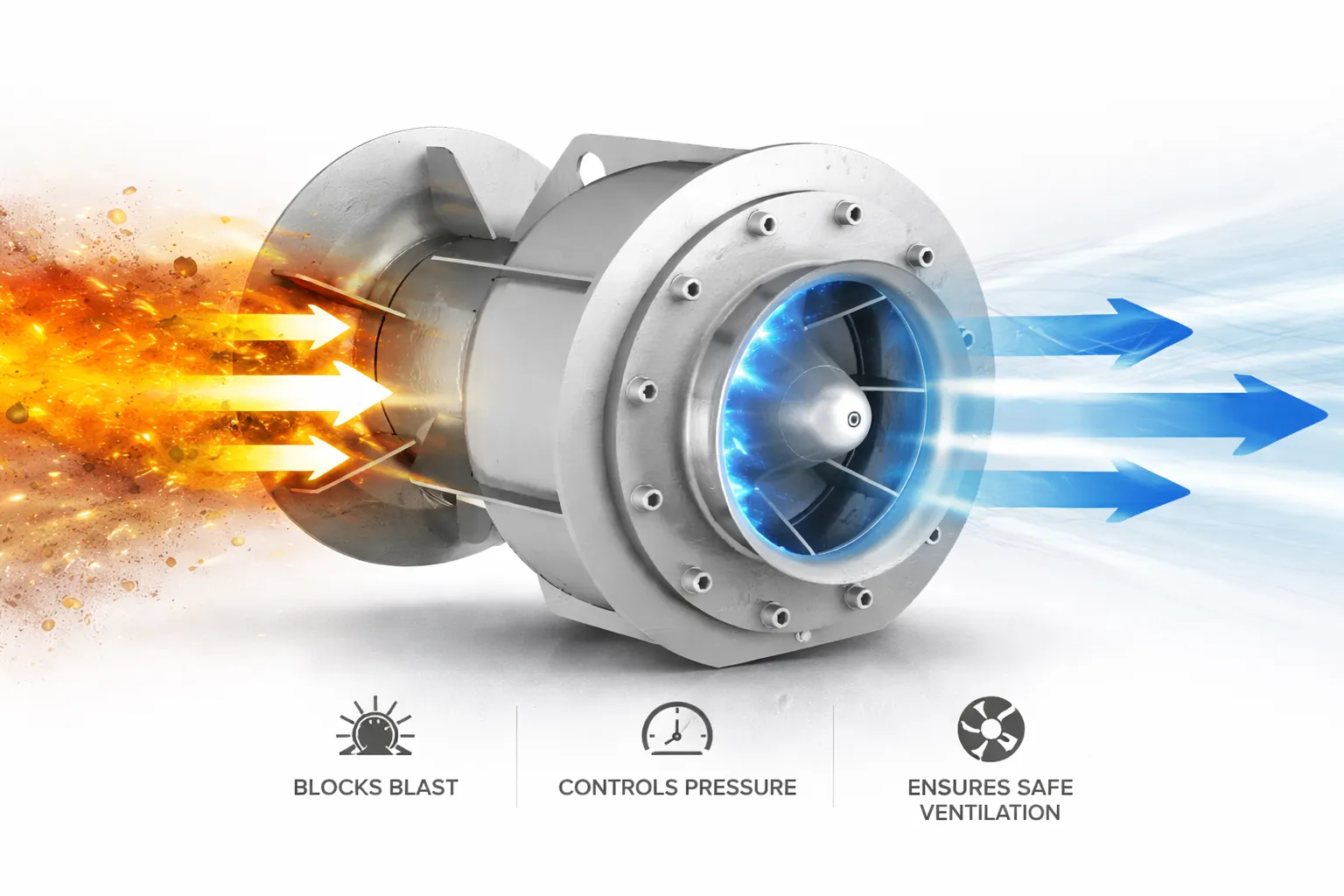
Imagine a coastal naval magazine with intake ducts open to sea air. Years of salt spray and monsoon rains test every component — especially ventilation hardware. After a storm, maintenance finds surface rust on several dampers and a corroded access hinge. The team needs to know: are blast valves waterproof and rust‑resistant enough for long service in harsh environments, or must they be specially specified and protected?
What blast valves are
Blast valves are engineered devices fitted into ventilation ducts and openings to allow normal airflow but rapidly close or restrict flow when an overpressure event occurs. They differ from ordinary duct devices — a Blast Gate used for dust control or a standard HVAC damper — because they are tested and built to withstand shock loads, seal reliably under impulse, and protect occupants and equipment in bunkers, control rooms, and similar protected spaces.
Why corrosion and water resistance matter
In many installations — a blast valve for bunker, underground shelter, or coastal plant — environmental exposure is as critical as blast performance. Corrosion can weaken structural members, degrade seals, and jam moving parts, compromising closure speed and airtightness. Water ingress can trap debris or cause hydraulic locking in some actuators. For HVAC branches where a blast valve HVAC integration exists, long-term reliability depends on material choices and protective measures as much as mechanical design.
How blast valves work under explosion pressure
Blast valves respond to a rapid pressure differential by moving flaps, sleeves, or pistons into a sealed position within milliseconds.
- Passive designs use inertia, springs, or counterweights, requiring no external power to close.
- Active designs use sensors and actuators to shut on command, offering integration with building management systems.
Under blast loads the valve must not only close but also maintain structural integrity and seal effectiveness despite any pre-existing corrosion or water damage. That’s why materials and protective finishes are part of the protective specification, not an afterthought.
Key features related to waterproofing and rust resistance
When evaluating valves for wet or corrosive sites, focus on these features:
- Corrosion resistance: use stainless steels (316L), duplex alloys, or protective coatings (epoxy, zinc flake, metallizing) where salt, chemicals, or humidity are present.
- Sealing efficiency: elastomeric seals must be specified for UV, ozone, and chemical resistance; consider silicone or fluorocarbon (FKM/Viton) variants for aggressive environments.
- Drainage and weep paths: design should prevent water pooling inside housings; include drain ports where exposure is expected.
- Actuator protection: enclosures (IP65/67) and stainless or coated actuator housings reduce ingress and electrical failures in active systems.
- Fastener and hinge materials: use stainless fasteners and sacrificial anodes or coated bearings to avoid galvanic corrosion.
- Surface finishes: polished or passivated surfaces reduce pitting; robust paint systems and passivation treatments extend life.
- Maintenance access: drains and removable panels make inspections and seal replacements straightforward.
- Structural strength: corrosion allowances (extra thickness) account for expected material loss over service life.
Are blast valves waterproof?
No standard blast valve is inherently “waterproof” in every installation sense — waterproofing depends on design and specification.
- External exposure: many valves are built to withstand rain and spray if specified with appropriate seals and coatings.
- Flooding: valves installed below expected flood levels require specific sealing, weep ports, and corrosion‑tolerant internals; some active systems must be located above flood lines or provided with watertight housings.
- Ingress protection: specify actuator and sensor IP ratings appropriate to the environment (for example, IP66 for heavy rain, IP67 for temporary submersion).
Are blast valves rust-resistant?
Yes — when specified correctly.
- Material selection: specifying 316L stainless or duplex stainless significantly increases resistance to rust in coastal or chemical-exposed sites.
- Coatings and passivation: epoxy, powder coats, hot-dip galvanizing, or metallizing protect carbon steel substrates where stainless is not feasible.
- Design life: include corrosion allowances in structural calculations and specify inspection intervals based on local climate.
Where blast valves are used
Typical applications include:
- Bunkers and shelters — primary use for a blast valve for bunker systems.
- Industrial plants — refineries, chemical plants, and storage facilities.
- Defense infrastructure — command centers, ammunition stores, and hardened communications.
- HVAC systems — critical supply and extract branches where blast valve HVAC integration preserves protected zones.
- Power plants and control rooms — to maintain operational continuity.
- Hazardous environments — tunnels, underground utilities, and coastal installations.
Factors affecting blast valve price in India
Blast valve price reflects environmental specification as much as blast rating:
- Material quality: stainless or duplex alloys cost more but reduce lifecycle maintenance.
- Pressure rating: higher blast ratings require heavier structures and testing.
- Design complexity: waterproof housings, special seals, and protected actuators increase cost.
- Custom engineering: retrofits in existing ducts or bespoke sizes raise fabrication expense.
- Certification standards: additional testing and documentation add to price.
- Installation environment: coastal, underground, or chemical exposures demand specialized finishes.
- Manufacturing precision and size: tolerance and large-diameter valves raise production costs.
How to choose blast valve manufacturers in India
When selecting vendors, assess:
- Industry experience: look for projects in coastal plants, naval bases, or underground installations.
- Engineering standards: transparent material specifications and corrosion allowances.
- Product testing: third-party test reports and environmental exposure test data.
- Compliance certifications: ISO, and where required, military or national standards.
- Customization capability: ability to add waterproof housings, drains, and actuator protection.
- Technical support: installation supervision, commissioning, and maintenance planning.
- Long-term reliability: spare parts, service contracts, and documented maintenance intervals.
Related Reading
Top 10 Hidden Secrets About Business & Finance You Need to Know
Welcome to our in-depth exploration of Business & Finance. In an era defined...
Why Business & Finance is Transforming the Global Industry Landscape
Welcome to our in-depth exploration of Business & Finance. In an era defined...