Anti-Collision Sensors and Collet Chucks: Improving Safety and Precision in Machining
By nutanswami
67 Views
Modern machining environments demand a high level of precision, repeatability and process safety. As CNC machines become faster and more automated, manufacturers also need technologies that can protect expensive equipment while maintaining reliable tool and workpiece positioning. Anti-collision sensors and collet chucks address two important aspects of this requirement.
An anti-collision sensor can help detect unexpected contact or overload conditions, while a collet chuck provides secure and accurate clamping for suitable workpieces or tools. When integrated into a well-designed machining process, these technologies can support productivity, equipment protection and consistent manufacturing results.
What Is an Anti-Collision Sensor?
An anti-collision sensor is a protective device designed to detect unexpected forces or collisions involving automated equipment, robots or machine components. In machining and robotic applications, collisions can occur because of programming errors, incorrect positioning, unexpected obstacles or component-related issues.
A collision can damage a robot, spindle, tool, fixture or workpiece. It can also result in significant downtime while equipment is inspected and repaired.
Why Collision Detection Matters
Modern manufacturing systems often operate at high speeds. When an automated component moves unexpectedly into another object, the resulting impact can cause damage within a very short period.
A protective sensing solution can help identify excessive force or abnormal contact and trigger an appropriate response. Depending on the application, this may involve stopping movement, separating components or protecting downstream equipment.
SCHUNK offers collision protection and monitoring technologies designed for use with robots and automation systems. Its collision protection products can help protect robot arms and end-of-arm tooling against overloads and collisions.
How Anti-Collision Technology Supports Automation
Automation systems are designed to repeat programmed movements accurately. However, real production environments can contain variables that are difficult to eliminate completely.
Workpieces may not always be positioned exactly as expected, tools can wear, fixtures can change and programming errors can occur. Collision protection provides an additional layer of security between the automated system and potential damage.
Protecting Expensive Equipment
Industrial robots, machining equipment and end-of-arm tooling represent significant investments. A collision can damage multiple components at once, leading to repair costs and production delays.
Protective technologies can help reduce the consequences of unexpected contact and support safer automated operation.
Reducing Unplanned Downtime
A major collision can bring an entire production cell to a halt. Depending on the damage, technicians may need to inspect equipment, replace components and verify system accuracy before production resumes.
Early detection of abnormal forces can help minimise the potential impact of some collision events.
Understanding Collet Chucks
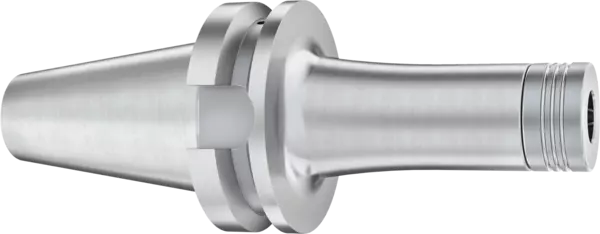
A collet chuck is a clamping device designed to hold a workpiece or tool securely and concentrically. Collets typically use a tapered design that allows the collet to contract around the component when clamping force is applied.
They are commonly used where secure holding and good concentricity are important.
Why Concentric Clamping Matters
During machining, even small positioning errors can affect the final dimensions and surface quality of a component. A suitable collet chuck can provide repeatable positioning and clamping for compatible workpieces.
This makes collet-based solutions particularly useful for applications involving cylindrical components and machining processes that demand reliable positioning.
Advantages of Collet Chucks
Collet chucks offer several characteristics that can make them suitable for precision machining.
Secure Workpiece Holding
The collet grips the component around its circumference, distributing clamping forces around the workpiece rather than relying on a single contact point.
Good Repeatability
A properly selected collet system can support repeatable workpiece positioning, which is important when manufacturing multiple components to consistent specifications.
Efficient Component Changes
Depending on the chuck design and application, collets can allow relatively quick changes between compatible workpieces. This can be valuable in production environments where setup time directly affects productivity.
Suitable for Smaller Components
Collet systems are often useful when machining smaller cylindrical workpieces that may not be ideally suited to conventional three-jaw or four-jaw chucking arrangements.
Collet Chuck Selection Considerations
Choosing a collet chuck should be based on the application rather than simply the maximum clamping capacity.
Workpiece Size and Geometry
The diameter, shape and length of the workpiece influence which collet system is appropriate. The collet must provide suitable contact and clamping force without damaging the component.
Required Accuracy
Applications involving tight tolerances require attention to concentricity, repeatability and overall chuck performance.
Machining Forces
The cutting process determines how much clamping force is required. Heavy machining operations may impose significantly greater forces than light finishing processes.
Machine Compatibility
The chuck must be compatible with the machine tool, spindle and available interface. Installation requirements and dimensions should be verified before selection.
Combining Protection With Precision
Anti-collision technology and collet chucks address different requirements, but both contribute to a reliable manufacturing environment.
A collet chuck helps secure the workpiece during machining, while an anti-collision system can provide protection against unexpected contact in automated applications. Together with suitable tooling, sensors and machine controls, these technologies can contribute to a safer and more controlled production process.
Supporting Automated Machining
As manufacturers increasingly connect CNC machines with robotic loading and unloading systems, collision protection becomes more relevant. A robot may repeatedly load components into a chuck or fixture, and even a small positioning error can result in contact.
A collision protection device can help safeguard the robot and tooling if an unexpected force occurs.
The Role of SCHUNK in Industrial Automation
SCHUNK develops technologies for gripping, automation, workholding and toolholding applications. Its portfolio includes clamping technology, robot accessories, gripping systems and collision protection solutions designed for industrial environments.
For manufacturers looking to automate machining operations, these technologies can form part of an integrated solution that connects robotic handling with secure workpiece positioning.
The value of an integrated approach lies in considering the entire process rather than selecting each component independently. The robot, gripper, chuck, fixture and machine should work together to achieve the required cycle time, accuracy and safety.
Improving Machining Reliability
Manufacturing productivity depends on more than machining speed. A process must also protect equipment, maintain consistent workpiece positioning and minimise interruptions.
Anti-collision sensors can provide an additional layer of protection in automated environments, helping detect unexpected forces before they result in more serious equipment damage. Collet chucks, meanwhile, can provide secure and repeatable clamping for suitable workpieces.
The appropriate solution depends on the machine, workpiece, automation setup and production requirements. Manufacturers should therefore evaluate factors such as load, accuracy, cycle time, machine compatibility and operating conditions before choosing a system.
Conclusion
Precision and protection are increasingly important as machining becomes more automated. Anti-collision technology can help safeguard robotic equipment and tooling from unexpected contact, while collet chucks provide reliable clamping for compatible workpieces.
When these technologies are selected as part of a broader manufacturing strategy, they can contribute to improved process reliability, reduced downtime and more consistent production.
SCHUNK's range of automation, gripping and clamping technologies provides manufacturers with options for developing integrated and application-specific solutions. For companies seeking to improve machining safety and precision, evaluating the right combination of anti-collision sensor technology and collet chuck solutions can be an important step towards a more reliable automated production process.