What Amazon Sellers Should Know Before Choosing an FBA Prep Partner
87 Views
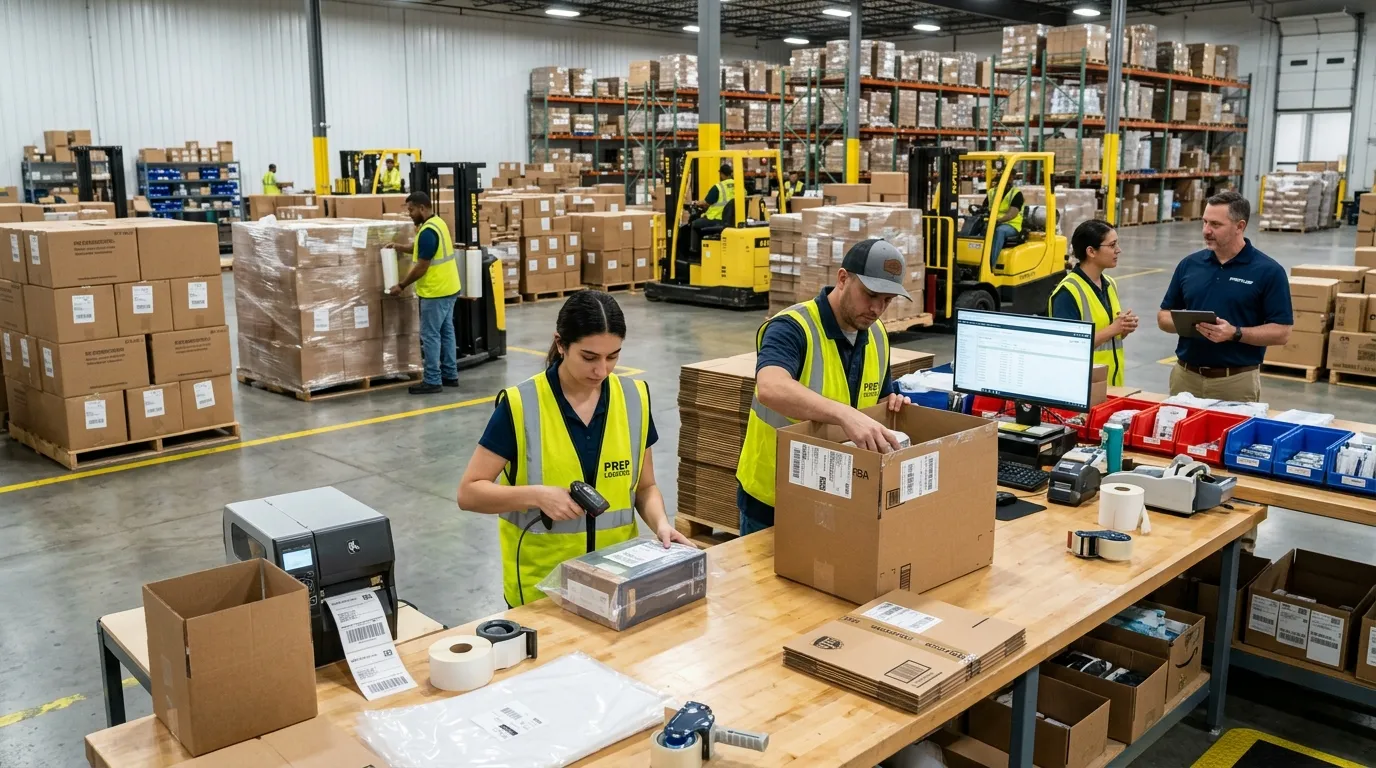
What Amazon Sellers Should Know Before Choosing an FBA Prep Partner
Growing an Amazon business brings a distinct kind of problem: the more successful you become, the harder it gets to manage everything behind the scenes. Inventory that once fit in a spare room now arrives on pallets. SKU counts that used to be manageable now span multiple categories, each with its own packaging requirements. At this point, many sellers begin exploring Amazon FBA prep services in USA as a way to maintain momentum without letting operational complexity eat into their growth. But not all prep partnerships are created equal, and understanding what actually separates a dependable provider from an average one can make a significant difference in your bottom line.
This article breaks down what sellers genuinely need to evaluate before handing off their inventory, what good Amazon fulfillment preparation looks like in practice, and why the right prep partner becomes a long-term competitive advantage rather than just a line item.
The Hidden Bottleneck Slowing Down Your Amazon Growth
Most sellers do not notice the damage that in-house prep causes until well after it has taken root. The early signs are subtle: your team spends a bit more time on packaging than expected, a shipment gets delayed because the right poly bag thickness was not on hand, or a few units come back rejected because a label was placed two millimeters off-spec.
These are not random errors. They are symptoms of a structural problem. Inventory preparation for Amazon's fulfillment network is a specialized discipline, not a side task. Amazon's Seller Central guidelines govern everything from carton weight limits and pallet configurations to FNSKU placement and suffocation warning text size. When these requirements are spread across a general warehouse team or a small operation wearing multiple hats, the probability of errors compounds with every SKU you add.
The bottleneck is not laziness or incompetence. It is that FBA-compliant preparation requires institutional knowledge, dedicated staff, and repeatable workflows that most seller operations are not set up to sustain at volume. Recognizing this early — before a costly removal order or an account warning — is what separates sellers who scale cleanly from those who plateau.
What Separates a Capable Prep Center from a Basic One
When evaluating Amazon inventory preparation providers, sellers often focus on per-unit pricing first. Price matters, but it is rarely the variable that determines long-term satisfaction. What actually drives results is operational depth: the combination of staff experience, process documentation, quality control checkpoints, and turnaround speed.
A capable prep center will have clearly defined receiving protocols so that your inventory is checked for damage, quantity discrepancies, and condition before a single label is applied. They will maintain updated knowledge of Amazon's requirements across categories, including those with stricter rules around expiration dates, bundling, or fragile item preparation. They should also be able to handle product-level inspections, not just carton-level counts, especially if you are sourcing from overseas where quality variance is common.
Beyond the physical work, transparency matters enormously. A reliable third-party prep partner will give you visibility into what was received, what was processed, what was flagged, and when your shipment was dispatched. This kind of accountability is easy to overlook when everything is going smoothly, but it becomes critical when something goes wrong and you need answers fast.
How FBA Prep Connects to Your Broader Supply Chain
A common misconception is that Amazon prep is an isolated function. In practice, it sits in the middle of your supply chain and touches nearly every other part of your operation. Goods need to arrive at the prep center correctly before they can be processed, which means your inbound freight arrangements directly affect prep timelines. If your shipments from overseas are delayed, consolidated incorrectly, or missing documentation, even the best prep center cannot save your restock schedule.
This is why sellers who manage high volumes often benefit from working with a prep partner that also has freight forwarding and logistics capabilities. When the same provider handles inbound freight coordination alongside the physical preparation work, communication gaps shrink, handoff delays reduce, and problems get resolved within one relationship rather than across three different vendors. If you are still piecing together separate providers for international freight, domestic transportation, and prep, it is worth looking into whether a more integrated supply chain management approach could simplify your operation.
Understanding the Real Cost Structure of Amazon Inventory Preparation
Sellers who switch from in-house to outsourced prep often discover that their previous cost estimates were incomplete. Calculating the true expense of preparing inventory internally requires accounting for more than wages and supplies. Lease obligations, equipment depreciation, staff turnover and retraining costs, errors and reprocessing time, and the opportunity cost of leadership attention all factor into the real number.
When a professional FBA prep center charges a per-unit rate, that rate covers labor, equipment, supplies, quality control, and the knowledge embedded in their processes. For most sellers moving meaningful volume, this bundled cost works out favorably against a fully loaded internal operation, especially because it scales without requiring capital investment. You are not financing industrial label printers or negotiating poly bag supplier contracts. You are paying for output, and the overhead is someone else's problem.
The key is to evaluate pricing in the context of what is actually included. Some providers quote low base rates and then layer on fees for inspections, repackaging, expiration date checks, or kitting. A transparent provider will give you a complete picture upfront so your per-unit margin calculations are accurate before you commit.
What Good Quality Control Looks Like in an FBA Context
Amazon's fulfillment network does not accept excuses. When a unit arrives at a fulfillment center with a smudged barcode, a missing safety warning, or a bundle that is not secured correctly, it gets flagged or rejected. Enough of these issues, and you are looking at stranded inventory, removal fees, and potential account health flags.
Quality control in a professional Amazon prep environment is not a final check at the end of the process. It is woven into each stage. Units are inspected at receiving, verified against your product specifications during prep, and checked again before cartons are sealed and labeled for shipment. Fragile items receive appropriate protective packaging, expiration-coded products are logged and managed by date, and anything that does not meet standard is set aside and flagged rather than quietly pushed through.
Sellers sourcing from international suppliers benefit particularly from this layer of oversight. Product defects, incorrect counts, and packaging that does not meet Amazon's requirements are more common with overseas production runs, and catching them before they enter the FBA network is far less expensive than dealing with returns and reimbursement claims afterward.
Evaluating Turnaround Time and Its Impact on Your In-Stock Rate
One underappreciated factor in choosing a prep partner is turnaround speed. For sellers running lean on safety stock, the number of days between inventory arriving at a prep center and being checked into Amazon's network directly affects your in-stock rate and, by extension, your organic ranking and buyability.
A well-run prep facility processes inbound shipments according to predictable timelines and communicates delays proactively. This allows you to plan reorders with confidence. If you are consistently running out of stock during your prep window, the issue may not be your reorder point — it may be that your prep provider is not processing quickly enough to keep up with your velocity.
When assessing potential providers, ask specifically about average receiving-to-dispatch timelines for shipments similar in size and complexity to yours. Also ask how they handle backlogs during peak periods like Q4 or Prime Day, when volume spikes across the industry simultaneously. Their answer will tell you a great deal about their capacity planning and how much priority your account is likely to receive.
Why Location Still Matters for Amazon FBA Prep
With Amazon's distributed fulfillment network, sellers sometimes assume that the physical location of their prep center is irrelevant. In practice, geography still plays a role. A prep center located near major port facilities or freight hubs can reduce inbound transportation costs and delays significantly, especially for sellers importing from Asia. Proximity to Amazon fulfillment centers in high-demand regions can also affect how quickly your inventory becomes available for purchase after check-in.
California-based prep operations, for example, offer clear advantages for sellers receiving ocean freight through the ports of Los Angeles and Long Beach, which together handle a substantial share of US import volume. Sellers using a prep partner with warehousing and fulfillment operations in California can often reduce the transit leg between port arrival and prep processing, compressing the total cycle time from factory to available inventory.
Choosing a Prep Partner That Grows With Your Business
The final and perhaps most important consideration is fit over time. A prep center that works well for a seller shipping two thousand units a month may not be equipped to handle thirty thousand units across fifty SKUs two years later. Before committing to a provider, think about where your business is headed and whether their capacity, technology, and service model can scale alongside you.
This includes asking about their warehouse management systems, how they handle new SKU onboarding, and whether they offer additional services like kitting, bundling, or multi-channel fulfillment if your strategy expands beyond Amazon.
Universal Shipping Inc. supports Amazon sellers at various growth stages with prep services designed around accuracy, compliance, and reliable turnaround. With integrated logistics capabilities and a California-based operation positioned close to major import corridors, Universal Shipping Inc. is built to handle the kind of volume and complexity that growing FBA businesses encounter as they scale.
Finding the right Amazon FBA prep partner in the USA is not just a logistics decision. It is a strategic one. The provider you choose will have a direct hand in your inventory availability, your compliance record, your per-unit margins, and ultimately your ability to compete at the level your brand deserves.
Related Reading
Top 10 Hidden Secrets About Business & Finance You Need to Know
Welcome to our in-depth exploration of Business & Finance. In an era defined...
Why Business & Finance is Transforming the Global Industry Landscape
Welcome to our in-depth exploration of Business & Finance. In an era defined...