AI Consulting Services: How to Build an AI Roadmap That Delivers ROI
By Emily Carter
53 Views
Most companies jump into AI without a plan. They buy a tool, run a pilot, and hope something good happens. Six months later, nothing has changed except the budget.
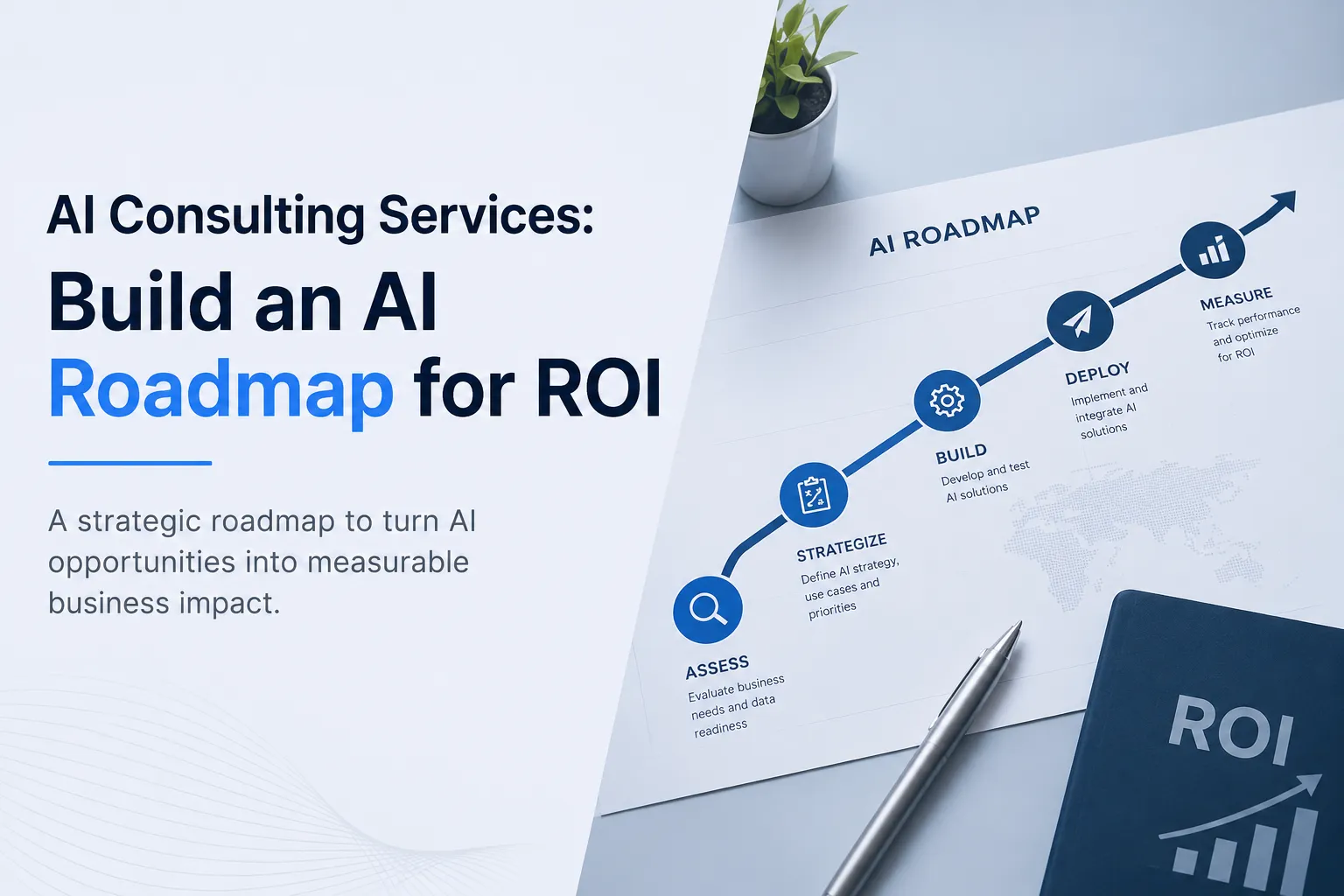
A roadmap fixes this problem. It tells you what to build, when to build it, and how you will know it worked. Good AI consulting services exist to build exactly this kind of roadmap, not to sell you software.
This guide walks through how a real AI roadmap gets built, what mistakes kill ROI, and where AI Governance and Consulting fits into the whole picture.
Why Most AI Projects Fail to Show ROI
Gartner has reported that a large share of AI projects never make it past the pilot stage. The reason is rarely the technology itself.
Teams pick AI use cases based on excitement, not business value. A chatbot sounds impressive in a demo. It means nothing if customers still call support twice as often.
Here is what usually goes wrong:
- No clear success metric before the project starts
- Data is messy, scattered, or incomplete
- Nobody owns the project once the vendor leaves
- The use case solves a small problem, not a costly one
- Governance and compliance get added after launch, not before
Artificial intelligence consulting exists to catch these problems early. A consultant asks the boring questions nobody wants to ask, like who will use this daily and what happens if the model is wrong.
What an AI Roadmap Actually Is
An AI roadmap is not a slide with a timeline on it. It is a working document that connects business goals to specific AI projects, in order of value.
Think of it like a construction blueprint. You would not build a house by nailing boards together and hoping it stands. AI needs the same discipline.
A real roadmap answers four questions:
- What business problems are worth solving with AI
- Which one should you tackle first
- What resources and data does each one need
- How will you measure if it worked
Skip any of these four, and the roadmap becomes a wish list instead of a plan.
The Roadmap Building Process, Step by Step
Step 1: Start With Business Goals, Not AI Trends
The first meeting in any solid AI consultation should not mention AI at all. It should cover revenue targets, cost pressures, and customer complaints.
A logistics company does not need AI. It needs fewer late deliveries. That distinction changes everything about what gets built next.
Ask this question in every internal meeting: "What would fixing this problem be worth in dollars?" If nobody can answer, the problem is not ready for AI yet.
Step 2: Audit What You Actually Have
Most businesses overestimate their data readiness by a wide margin. Spreadsheets scattered across five departments do not count as a data foundation.
This step checks three things before anything gets built:
- Data is it accurate, connected, and easy to reach across teams
- Systems can your current tools actually support AI integration
- People does anyone on staff understand how to maintain this once it launches
Skipping this audit is the single most common reason AI projects stall midway. A consultant will pull sample data and test it before recommending anything.
Step 3: Score and Rank Use Cases
Not every AI idea deserves a spot on the roadmap. Score each one on two things: business impact and how hard it is to build.
A use case with high impact and low difficulty should always go first. That is where the fastest ROI usually shows up. A few real examples make this clearer:
- Automating repetitive data entry high impact, low difficulty, build first
- Predictive maintenance for equipment high impact, high difficulty, needs careful planning
- AI-written marketing copy medium impact, low difficulty, nice to have but not urgent
- Full customer service automation high impact, high difficulty, save for a later phase
This scoring step is where artificial intelligence consulting earns its fee. Anyone can list ten AI ideas. Ranking them accurately takes experience.
Step 4: Pilot Small, Then Scale
Never build the entire vision on day one. Pick one use case, run it small, and measure results honestly.
A mid-size retailer wanted AI across their entire supply chain. Their consultant talked them into piloting demand forecasting for one product category first.
The pilot cut overstock by 22% in that category within ten weeks. Only after that success did the company expand the model to other product lines.
Step 5: Build Governance Before You Scale
This step gets skipped more than any other, and it costs companies the most later.
AI governance services set the rules before problems happen: who can access the model, how decisions get reviewed, and what happens when the AI is wrong. Waiting until after a compliance issue is far more expensive than building rules upfront.
Good AI governance solutions typically cover:
- Data access rules and permissions
- A human review process for high-stakes decisions
- Documentation for audits and regulators
- A clear escalation path when something breaks
A healthcare company we studied added governance only after a regulator flagged their patient-triage model. The fix took four months and cost more than the original project.
AI Governance and Consulting: Why They Cannot Be Separated
Some businesses treat governance as a legal afterthought. That mindset causes real damage once a model makes a biased or wrong decision at scale.
AI Governance and Consulting works best as one connected service, not two separate ones. Strategy without rules leads to risk. Rules without strategy lead to projects that never launch.
A useful analogy: building an AI system without governance is like driving a car with no brakes. It might work fine on a straight road. It fails badly the moment something unexpected happens.
In-House Team or Consulting Partner: Weighing the Choice
Building an in-house AI team takes months of hiring and costs more in salaries long-term, but it gives you full control once the team is trained. Governance knowledge is often missing early on, since most in-house hires focus on models, not rules.
Hiring an AI consultation partner gets you to a first result faster, since the expertise already exists. The upfront project cost runs higher, but the risk of wasted spend drops because the framework is already tested.
Neither option is universally right. A company with an existing data science team may only need governance support. A company starting from zero usually needs full AI Consulting Services.
Real Numbers: What Good Roadmaps Deliver
A well-built roadmap does not guarantee results by magic. It works because it forces sequencing and measurement from day one.
McKinsey's research on AI adoption has found that companies following structured deployment plans report meaningfully higher returns than those running scattered pilots. Structure beats speed almost every time.
Here is what changes when a roadmap replaces guesswork:
- Projects get killed early if data quality is bad, saving wasted spend
- Teams measure ROI in weeks instead of guessing after a year
- Governance issues surface before launch, not after a lawsuit
- Leadership can defend AI budget with real numbers, not vibes
Common Roadmap Mistakes to Avoid
Even good intentions lead to bad roadmaps sometimes. Watch for these patterns.
Chasing every trend at once spreads resources too thin. Pick two or three priority use cases, not ten.
Ignoring the people using the tool daily creates adoption problems. A roadmap built only by executives often misses how work actually happens on the ground.
Setting vague success metrics like improve efficiency makes ROI impossible to prove. Use specific numbers: reduce processing time by 30%, cut errors by half.
Treating the roadmap as fixed forever wastes future opportunities. Review it every quarter and adjust based on what the data shows.
How to Choose the Right AI Consulting Partner
Not every firm offering artificial intelligence consulting understands your industry's specific risks. Ask pointed questions before signing anything.
Questions worth asking a potential partner:
- Can you show a past project with measured, not estimated, ROI?
- How do you handle governance and compliance from the start?
- What happens to the project once your team leaves?
- Will you commit to a pilot before a full-scale rollout?
A partner who avoids these questions, or gives vague answers, is a warning sign. Real ai governance services and consulting partners welcome scrutiny because they have proof to show.
Bringing It All Together
An AI roadmap is not a document you write once and forget. It is a living plan built on real business problems, honest data audits, and measured pilots.
AI Consulting Services matter most in the early stages, where wrong decisions cost the most to fix later. Getting governance right from day one saves months of rework and protects the business from real risk.
Skip the trends. Start with the problem worth solving, rank your options honestly, and build governance alongside strategy, not after it. That is how a roadmap turns into actual ROI instead of another shelved slide deck.