5 AI Companies Using NLP to Improve Medical Coding Accuracy
By john wilims
3 Views
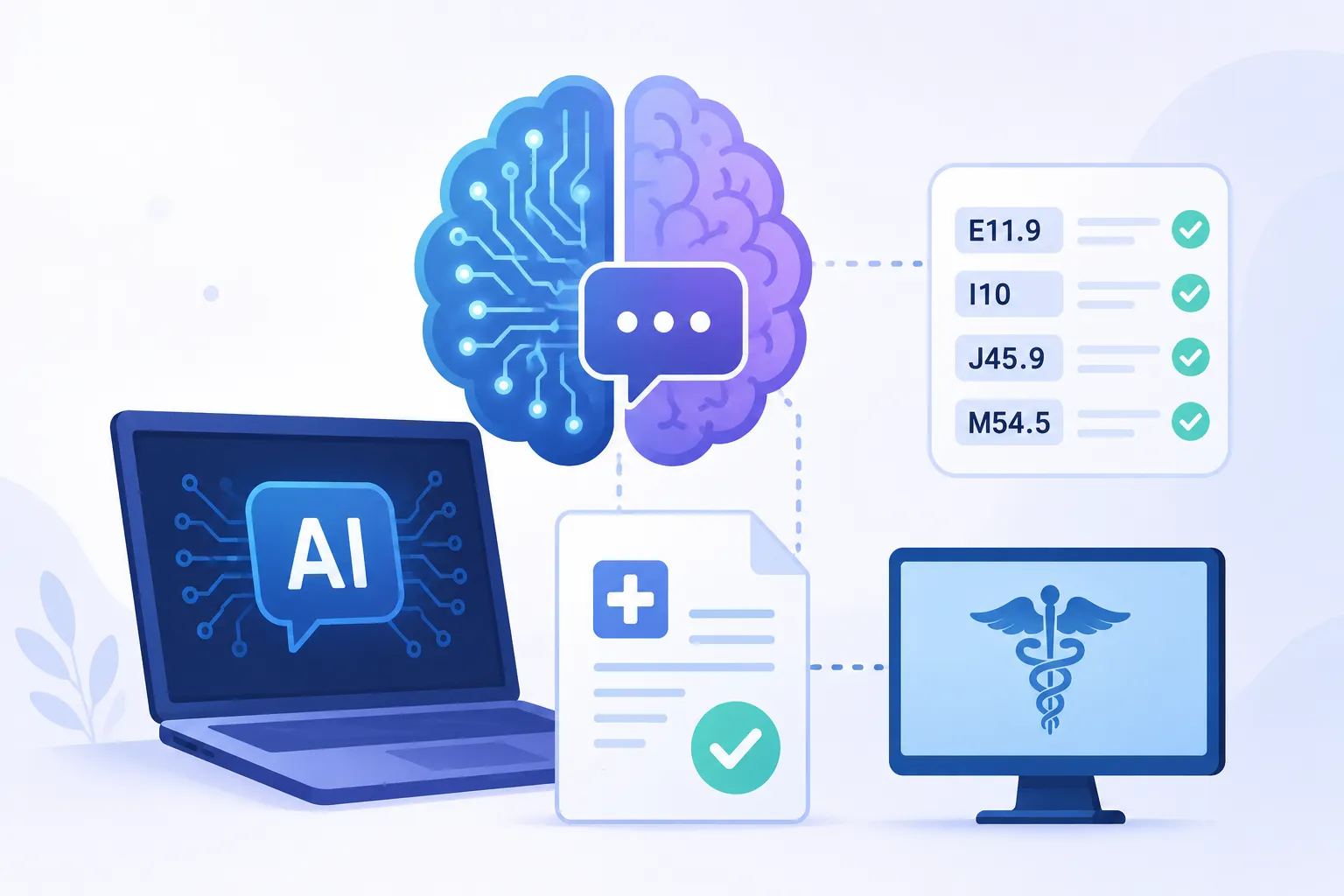
Medical coding is becoming increasingly technology driven. Healthcare organizations are using artificial intelligence, natural language processing, and clinical language technologies to interpret medical documentation, identify diagnoses and procedures, and suggest appropriate ICD 10 and CPT codes.
Traditional coding still depends heavily on trained professionals reviewing clinical documentation. AI can support this process by analyzing large volumes of unstructured medical text and identifying relevant information faster. Research into automated clinical coding has also shown how deep learning and natural language processing can help transform clinical documentation into standardized medical codes.
Several companies are now applying these technologies to real world revenue cycle workflows. Here are seven AI companies worth knowing when evaluating medical coding automation.
1. Corti
Corti develops clinical AI solutions, including Symphony for Medical Coding. The platform approaches medical coding as a reasoning task rather than simply predicting codes from previously labeled examples.
Symphony analyzes clinical narratives and applies coding rules to generate medical codes with supporting evidence. Corti reports that its system achieved strong results across several medical coding benchmarks and is available through an API for organizations building healthcare AI applications.
This approach is particularly relevant for organizations interested in explainable and scalable automated coding.
2. Fathom
Fathom focuses on AI powered medical coding automation for healthcare organizations. Its technology is designed to process medical records and support coding operations across health systems, physician groups, and outpatient organizations.
The company describes its platform as supporting both facility and professional coding and using AI to automate large volumes of coding work. It can also be used to review coding performed by existing teams and identify potential errors for further review.
For organizations managing high coding volumes, automation can provide another way to improve consistency while reducing repetitive manual work.
3. CodaMetrix
CodaMetrix provides an AI powered contextual coding platform designed around healthcare coding workflows.
Its technology uses clinical context to automate coding across different service lines. The company also emphasizes coding completeness, payer specific rules, and auditing capabilities.
Context is important in medical coding because the same medical term can have different implications depending on the patient's documentation, procedure, specialty, and other clinical information.
4. Nym
Nym focuses specifically on autonomous medical coding. Its platform uses Clinical Language Understanding technology and a rules based approach to interpret patient charts and assign medical codes.
According to Nym, its engine can process clinical language, apply coding guidelines, create audit trails, and automatically update when coding guidelines change.
Nym's technology illustrates how medical coding automation can combine language understanding with coding rules rather than relying solely on generic natural language processing.
5. Solventum
Solventum offers the 360 Encompass Professional System, which uses proprietary natural language understanding technology to generate suggested CPT and ICD 10 CM codes.
The system provides auto suggested codes to professional coding teams and includes capabilities such as query support, code linking, and customized edits.
Solventum also offers autonomous coding workflows in which qualifying encounters can move through automated coding while other cases are routed into workflows that involve coder review.
This hybrid approach can be useful for organizations that want to increase automation without removing human oversight from more complex encounters.
How NLP Can Improve Medical Coding
Natural language processing is important because much of the information required for coding exists in clinical narratives rather than structured fields.
An NLP based coding workflow can generally follow this path:
Clinical documentation → Language processing → Clinical concepts → Coding rules → ICD 10 or CPT suggestions → Review or automated submission
The technology can help identify diagnoses, procedures, medications, clinical conditions, and other information that may influence coding.
However, accuracy should not be evaluated only by looking at whether an AI system can generate a code. Healthcare organizations should also consider explainability, auditability, coding guideline updates, specialty coverage, integration, compliance, and how the system handles uncertain cases.
AI Coding and Medical Coding Outsourcing
AI does not necessarily replace medical coding outsourcing. In many healthcare organizations, technology and external coding expertise can work together.
An organization may use AI to process routine encounters while outsourcing partners provide specialized coding, quality assurance, auditing, or human review for more complex cases.
When evaluating a coding partner, organizations should consider:
- Coding accuracy and quality assurance
- Experience across relevant specialties
- AI and automation capabilities
- HIPAA and data security practices
- Human review processes
- Integration with existing systems
- Scalability during volume changes
- Audit and compliance support
The right combination depends on an organization's coding volume, staffing model, technology environment, and revenue cycle objectives.
How to Evaluate AI Medical Coding Vendors
Choosing an AI coding platform requires more than comparing advertised accuracy percentages.
Healthcare organizations should ask whether a solution can work with their existing EHR and revenue cycle systems, support the required code sets, provide transparent audit trails, accommodate human review, and keep up with changing coding guidelines.
Vendor management is also important when organizations use multiple technology and service providers. A vendor management system healthcare strategy can help centralize vendor information, contracts, compliance requirements, performance metrics, and ongoing relationships.
This becomes especially useful when an organization combines AI coding software with medical coding outsourcing, auditing services, RCM technology, and other third party solutions.
Where RCR|HUB Fits
Healthcare organizations researching AI medical coding vendors do not always need a coding platform directly. Sometimes the first challenge is finding and comparing the right vendors.
RCR|HUB is a U.S. focused healthcare Revenue Cycle Management directory and vendor discovery platform connecting healthcare organizations with more than 1,300 Business Partners across 95 specialized Revenue Cycle categories. Its directory includes categories covering Artificial Intelligence, Coding Software, Coding Services Onshore, Coding Services Offshore, Medical Coding Audit and Accuracy Services, Outsourcing, and Vendor Management Software and Services.
That makes RCR|HUB relevant for organizations researching the broader ecosystem around AI enabled medical coding. Rather than positioning RCR|HUB as an AI coding vendor, organizations can use the platform to research different types of Revenue Cycle partners based on their specific operational needs.
Final Thoughts
AI and natural language processing are changing how healthcare organizations approach medical coding. Companies such as Corti, Fathom, CodaMetrix, Nym, Solventum, Medmio, and emtelligent are applying different approaches to clinical language understanding, coding automation, and revenue cycle workflows.
The most suitable solution will depend on factors such as coding volume, specialties, integration requirements, compliance needs, human review policies, and the organization's existing Revenue Cycle strategy.
For organizations considering AI coding alongside medical coding outsourcing or other RCM services, evaluating the technology and the vendor behind it is equally important. A structured vendor discovery process can help healthcare leaders compare capabilities and build a coding strategy that balances automation, accuracy, compliance, and human expertise.