From Field Data to Smarter Decisions: How Agriculture Software Is Modernizing Farming
By Dinesh Kumar
30 Views
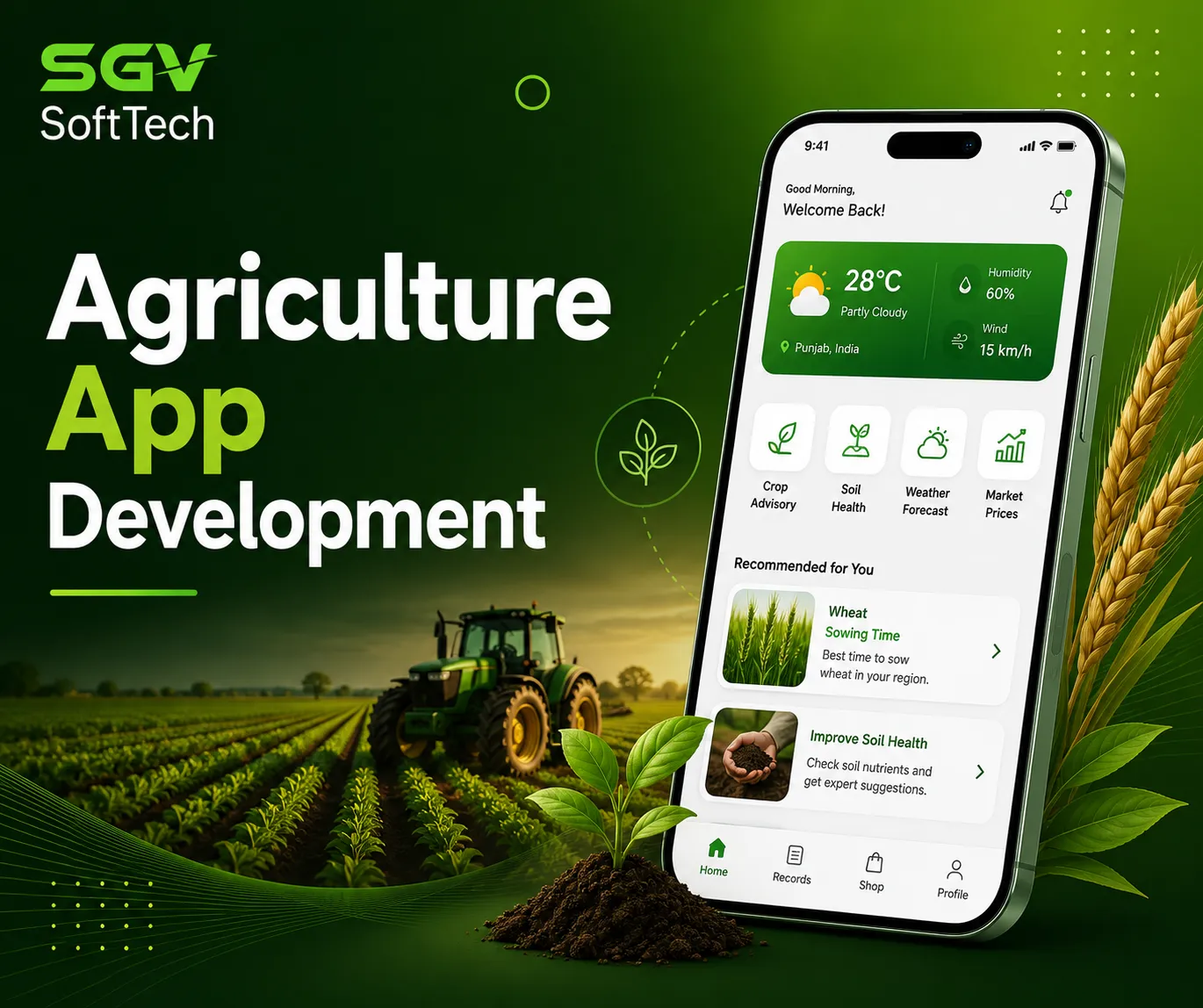
Agriculture has always depended on practical knowledge, timing, weather conditions, and careful resource management. Today, however, farmers and agricultural businesses have access to another powerful resource: digital technology. Software can bring together information about crops, fields, equipment, inventory, weather, workers, and sales, helping agricultural organizations manage increasingly complex operations from connected digital platforms.
This shift has created growing opportunities for agriculture software development. Instead of relying on spreadsheets, paper records, disconnected applications, or manual communication, agricultural businesses can use customized software to centralize important information and streamline everyday workflows.
Modern agriculture software is not limited to farm management. Depending on the business model, it can support precision farming, crop monitoring, livestock management, supply chains, equipment tracking, inventory, marketplace operations, financial management, and data-driven decision-making.
Why Agriculture Needs Specialized Software
Agricultural operations are influenced by variables that can change quickly. Weather, soil conditions, water availability, crop health, market prices, labor availability, equipment performance, and seasonal cycles can all affect daily decisions.
Generic business software may handle basic accounting or employee management, but it may not understand agricultural workflows. Specialized software can be designed around the way farms, agribusinesses, cooperatives, suppliers, and agricultural organizations actually operate.
This is where agriculture software development services can provide value. Instead of forcing an agricultural business to change its workflow around a generic system, custom software can be designed around its existing processes and future goals.
Farm Management as a Digital Workflow
Farm management software can bring several operational activities into one platform. Farmers or managers may be able to create field records, monitor crop cycles, schedule activities, manage resources, record expenses, and maintain historical data.
A centralized dashboard can provide a clearer view of what is happening across different fields or locations.
For larger agricultural businesses, this can be particularly useful because managers may need to coordinate multiple farms, teams, crops, and seasonal activities simultaneously.
Crop Planning and Monitoring
Crop management is another area where software can provide structured information. Users can record what is planted in each field, track growth stages, schedule farming activities, and maintain records of inputs.
When combined with data from sensors, satellites, drones, or other connected technologies, software can provide additional visibility into field conditions.
For example, an agricultural platform may display information related to soil moisture, temperature, vegetation, or irrigation conditions. The purpose is not simply to collect data but to turn it into information that can support practical decisions.
Precision Agriculture and Data-Driven Farming
Precision agriculture uses technology to help agricultural businesses make more targeted decisions about resources and field management.
Software can bring together information from GPS systems, sensors, satellite imagery, weather services, drones, and farm equipment. A centralized platform can then organize this information into maps, dashboards, reports, or alerts.
A farmer could use field-level information to identify areas that may require additional attention instead of treating an entire field in exactly the same way.
This can potentially support more efficient resource management while giving agricultural organizations a clearer understanding of field conditions.
Smart Irrigation Management
Water management is an important concern for agricultural operations. Software connected to sensors and irrigation equipment can provide information about soil moisture, weather conditions, water usage, and irrigation schedules.
A smart irrigation system can help users monitor conditions and make decisions about when and where irrigation may be required.
Automated controls can also be integrated where appropriate, allowing connected equipment to respond to predefined conditions.
The software should provide clear visibility into automated actions so that users can understand what the system is doing and intervene when necessary.
Agricultural Equipment Management
Modern farms may depend on tractors, harvesters, irrigation systems, storage equipment, and other machinery. Equipment downtime can disrupt agricultural operations, particularly during time-sensitive seasons.
Agriculture software can maintain equipment records, service schedules, operating hours, maintenance history, and inspection information.
Notifications can remind users about upcoming maintenance activities. Equipment tracking can also help organizations understand utilization and identify machinery that may require attention.
For large agricultural operations, centralized equipment information can make asset management considerably easier.
Livestock Management Software
Agricultural software is not limited to crop farming. Livestock operations can also benefit from specialized digital systems.
A livestock management platform can help maintain animal records, feeding schedules, health-related information, breeding records, inventory, and other operational data.
The exact functionality depends on the type of livestock operation and applicable regulations. The goal is to replace fragmented records with a structured system that makes important information easier to access and manage.
Supply Chain and Inventory Management
Agriculture involves a long journey from production to the final customer. Seeds, fertilizers, equipment, packaging materials, harvested products, storage facilities, transportation, wholesalers, retailers, and other participants may all be involved.
Software can connect inventory management with procurement, warehouse operations, transportation, and sales.
Agricultural businesses can monitor stock levels, record incoming and outgoing goods, manage suppliers, and track product movement through different stages.
For businesses dealing with perishable products, timely information can be particularly important.
Agricultural Marketplace Platforms
Technology can also connect agricultural producers with buyers. A marketplace application or web platform can allow farmers, suppliers, wholesalers, restaurants, retailers, or consumers to discover and purchase agricultural products.
Depending on the business model, such platforms may include product catalogs, farmer profiles, pricing, order management, payments, delivery tracking, reviews, and notifications.
A marketplace can therefore become a separate digital business model within the wider agricultural technology ecosystem.
Weather Data and Alerts
Weather can have a significant impact on agricultural decisions. Software can integrate weather APIs or connected weather stations to provide localized information.
Applications may display forecasts, temperature, precipitation, wind conditions, or other relevant information and use it to support scheduling and alerts.
The value comes from presenting weather information alongside agricultural data rather than requiring users to switch between multiple platforms.
Artificial Intelligence in Agriculture Software
AI can add another layer of intelligence to agricultural platforms. Depending on the available data and business objective, AI systems can assist with image analysis, crop monitoring, forecasting, anomaly detection, demand planning, or recommendations.
For example, computer vision may be used to analyze crop images for signs of visible stress or disease. Predictive models can also analyze historical information to identify patterns.
However, AI-generated recommendations should be treated carefully. Agricultural decisions can have significant financial and environmental consequences, so systems should communicate limitations and provide users with appropriate context rather than presenting uncertain predictions as guaranteed outcomes.
Why Choose an Agriculture Software Development Company?
Agricultural technology projects often involve a combination of software, hardware, data, field operations, and business workflows. An experienced agriculture software development company can help translate these requirements into a practical technology solution.
Businesses should evaluate a development team's experience with IoT integrations, cloud systems, mobile applications, dashboards, APIs, data management, analytics, and agricultural workflows.
Understanding the real operating environment is particularly important. Software designed without considering field conditions, connectivity limitations, device usage, or seasonal workflows may not perform as expected in practice.
Custom Agriculture Software Development
Every agricultural organization has different requirements. A small farm may need a straightforward crop-management platform, while a large agribusiness may require multi-location management, IoT integration, inventory systems, analytics, and enterprise-level access controls.
Custom software allows businesses to select functionality around their specific needs.
A modular architecture can also make it possible to start with essential features and add capabilities later. This can be useful for businesses that want to validate a digital workflow before investing in a larger platform.
Security and Data Management
Agricultural software can contain commercially important information about farms, crops, inventory, suppliers, customers, equipment, and finances.
Strong authentication, role-based access, secure APIs, encrypted communication, backups, and appropriate data-management policies can help protect this information.
Organizations should also determine who owns the data, who can access it, where it is stored, and how long it should be retained.
Testing and Integration
Agricultural applications often need to operate across different environments. A field-based mobile application may experience weak connectivity, while an office dashboard may depend on high-volume data synchronization.
Testing should therefore cover offline or unstable network conditions where relevant, device compatibility, sensor integrations, APIs, dashboards, notifications, and data accuracy.
Hardware and software integrations should also be tested together rather than independently when the application's operation depends on both.
The Future of Agriculture Software
Agricultural technology is moving toward increasingly connected ecosystems. Sensors, drones, satellite imagery, automated machinery, cloud platforms, mobile applications, and AI can all contribute to a larger digital infrastructure.
The future will not necessarily be about replacing agricultural expertise with software. Instead, technology can provide farmers and agricultural businesses with better access to information and more organized workflows.
The most useful systems will likely be those that turn complex data into practical information without making everyday operations unnecessarily complicated.
Final Thoughts
Modern agriculture is becoming increasingly data-driven, and software is helping agricultural businesses manage this transformation. From crop monitoring and irrigation to equipment, livestock, inventory, supply chains, and marketplaces, digital platforms can connect multiple parts of an agricultural operation.
Effective agriculture software development services should begin with the actual needs of the agricultural business rather than technology alone. Understanding field conditions, user workflows, connectivity, data requirements, and operational goals is essential when designing a practical solution.
For businesses considering an agriculture software development company, the focus should be on finding a team capable of combining agricultural workflows with reliable software engineering, integrations, analytics, and scalable architecture.
When implemented thoughtfully, agriculture software development can become more than a digital record-keeping system. It can provide a connected foundation for better visibility, organized operations, efficient resource management, and smarter decision-making across the agricultural value chain.