Addressing Overuse Injuries Through Acupuncture for Sports Injuries
By Shivani
65 Views
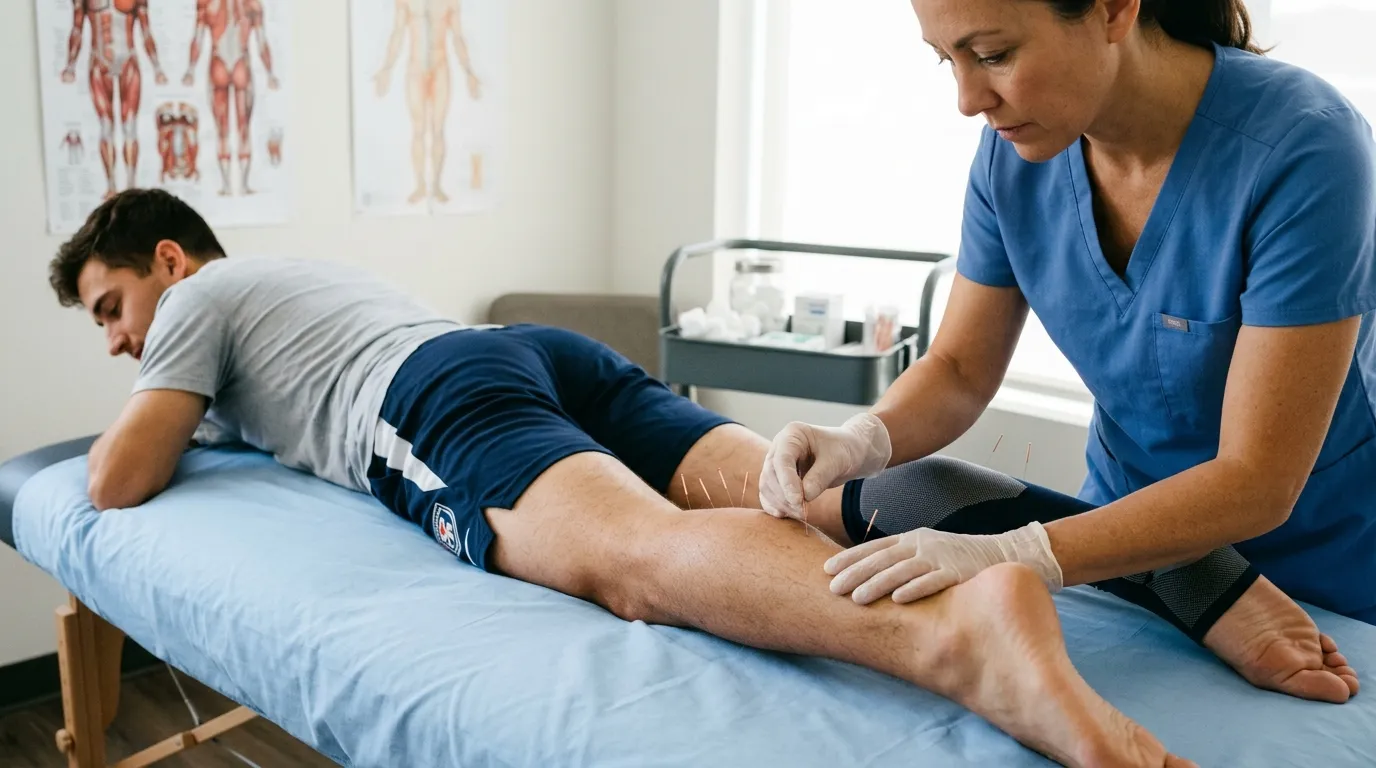
The athletic landscape of 2026 has shifted toward high-intensity, year-round participation, leading to a significant surge in repetitive strain conditions. Whether it is the explosive rise in pickleball-related injuries or the demands placed on "hybrid athletes" balancing strength and endurance, the body often reaches a breaking point where traditional rest and icing are no longer enough. Overuse injuries, unlike acute tears, develop through a subtle cycle of micro-trauma that eventually compromises the structural integrity of tendons, ligaments, and bone.
At Swissacu, we recognize that managing these conditions requires more than symptom suppression; it requires a physiological "reset." Current research highlights that acupuncture for sports injuries is one of the most effective ways to break the chronic inflammatory cycle and stimulate genuine tissue remodeling. By moving beyond general wellness and focusing on the neurobiological mechanisms of repair, athletes can return to their sport with improved resilience and a lower risk of future setbacks.
The Micro-Trauma Cycle: Why Traditional Rest Often Fails
Overuse injuries occur when the rate of tissue breakdown exceeds the body’s ability to repair itself. In the initial stages, this might feel like a minor ache that disappears after a warm-up. However, as the repetitive stress continues, the affected area—usually a tendon or fascia—enters a state of "tendinosis" or degenerative wear. Unlike acute inflammation, which is a healthy part of the healing process, chronic overuse often involves a lack of proper blood flow and a "stuck" state of failed repair.
Traditional advice like the RICE protocol (Rest, Ice, Compression, Elevation) can sometimes hinder long-term recovery for overuse cases. Prolonged icing can actually restrict the very blood flow needed to deliver nutrients to dense, poorly vascularized tissues like the Achilles tendon or the plantar fascia. This is where acupuncture provides a critical intervention by physically stimulating the area to re-initiate the healing response without the side effects of anti-inflammatory medications.
| Injury Type | Primary Cause | Standard 2026 Treatment | Why Acupuncture Enhances Recovery |
| :--- | :--- | :--- | :--- |
| Achilles Tendinopathy | High-volume running | Eccentric loading, Shockwave | Stimulates local blood flow and reduces central nervous system inhibition. |
| Pickleball Elbow | Repetitive paddle swings | Bracing, NSAIDs | Deactivates myofascial trigger points in the forearm to reduce tendon pull. |
| Shin Splints (MTSS) | Sudden training increases | Rest, New footwear | Reduces periosteal inflammation and balances calf muscle tension. |
| Rotator Cuff Strain | Overhead movements | Physical Therapy, Injections | Targets subacromial bursitis and improves scapular stabilization. |
Rewiring the Nervous System: Acupuncture for Chronic Neural Patterns
One of the most groundbreaking shifts in sports medicine in 2025 and 2026 is the understanding of "cortical inhibition." Research has shown that chronic overuse injuries don't just damage the tissue; they change how the brain communicates with the muscle. For example, athletes with long-term Achilles pain often show a reduction in "neural drive," where the brain intentionally weakens the muscle to protect the joint. This leads to persistent weakness that physical therapy alone may struggle to overcome.
Acupuncture for sports injuries acts as a neurological recalibration tool. By stimulating specific motor points—the locations where the motor nerve enters the muscle—acupuncture can effectively "reboot" the connection between the brain and the injured area. This process, often referred to as neuromuscular re-education, helps eliminate compensatory movement patterns that often lead to secondary injuries in the hips or lower back.
- Pain Modulation: Stimulates the release of endogenous opioids (endorphins and enkephalins) to block pain signals at the spinal cord level.
- Neuroplasticity: Encourages the brain to normalize sensory input from the injured site, reducing the "threat" response that causes muscle guarding.
- Central Nervous System (CNS) Balancing: Regulates the autonomic nervous system to move the body from a sympathetic "fight-or-flight" state into a parasympathetic "rest-and-repair" state.
- Motor Point Activation: Deactivates hyperactive muscles (tightness) and awakens inhibited muscles (weakness) to restore joint symmetry.
Cellular Remodeling: Stimulating Fibroblasts and Mitochondria
Recent clinical studies in 2026 have delved into the mechanobiology of acupuncture, revealing how the physical insertion of a needle influences cellular behavior. When an acupuncture needle is manipulated, it creates a "needle grasp" in the fascia, the connective tissue that wraps around muscles. This mechanical force triggers Piezo1 channels in fibroblasts—the cells responsible for producing collagen. For an athlete with a chronic overuse injury, this means the acupuncture treatment is literally signaling the body to build stronger, more organized tissue.
Furthermore, emerging research suggests that acupuncture has a protective effect on mitochondrial function. Mitochondria are the powerhouses of the cell, and heavy-load exercise can sometimes lead to mitochondrial fragmentation and oxidative stress. Acupuncture has been shown to alleviate this damage, promoting faster energy recovery at the cellular level. This is particularly vital for endurance athletes who need to maintain cellular efficiency over long training cycles.
1. Cytokine Regulation: Acupuncture reduces pro-inflammatory cytokines (like TNF-α and IL-6) while increasing anti-inflammatory markers to clear "dead" inflammation.
2. Vasodilation: Induces the release of nitric oxide, which dilates blood vessels and increases the delivery of oxygen and nutrients to damaged tendons.
3. Collagen Synthesis: Encourages fibroblasts to transition into a repair state, helping to "fill in" micro-tears in the connective tissue.
4. Mitochondrial Biogenesis: Supports the repair of skeletal muscle mitochondria, reducing exercise-induced fatigue and speeding up the intervals between training sessions.
Common 2026 Overuse Syndromes Treated at Swissacu
The specific types of overuse injuries we see in Redmond and the surrounding areas often follow current fitness trends. As of 2026, pickleball has become a leading cause of lateral epicondylitis (tennis elbow) and rotator cuff irritation due to the repetitive, high-velocity nature of the sport. Similarly, the trend toward marathon running among amateur athletes has led to a 42% injury rate in those who do not integrate proper recovery protocols, with medial tibial stress syndrome (shin splints) and IT band syndrome topping the list.
Acupuncture is uniquely suited for these conditions because it can target the deep structures that are difficult to reach with massage or foam rolling. For IT band syndrome, for instance, the problem is rarely the band itself but rather the tightness in the surrounding hip muscles (the TFL and gluteus medius). Acupuncture allows us to release these deep-seated tensions, taking the "pull" off the knee joint and allowing the athlete to move through a full range of motion without the sharp, stabbing pain common in these conditions.
- Iliotibial (IT) Band Syndrome: Releasing the hip stabilizers to reduce friction at the lateral knee.
- Plantar Fasciosis: Stimulating the intrinsic foot muscles and calf complex to improve foot mechanics.
- Swimmer's Shoulder: Addressing subacromial impingement by relaxing the pectoralis minor and strengthening the serratus anterior via motor points.
- Stress Fracture Support: Utilizing electro-acupuncture to stimulate osteoblast activity and improve bone mineral density during the healing phase.
- Carpal Tunnel for Esports: Managing nerve entrapment in professional gamers by reducing forearm muscle tension and improving nerve gliding.
Advanced Modalities: Electro-Acupuncture and Multifaceted Recovery
While manual acupuncture is highly effective, the integration of electro-acupuncture (EA) has become a gold standard for sports injuries in 2026. EA involves attaching a small, regulated electrical current to the acupuncture needles. This provides a continuous, rhythmic stimulation that is far more powerful for treating stubborn, chronic pain and nerve-related dysfunction. Studies have shown that EA can accelerate the recovery of bone fractures and significantly improve the "effective rate" of treating moderate rotator cuff injuries compared to traditional methods alone.
At Swissacu, we often combine acupuncture with other evidence-based modalities to provide a comprehensive recovery environment. This multidisciplinary approach ensures that while the acupuncture is fixing the "wiring" and the cellular environment, other tools are addressing the structural and lifestyle factors that contributed to the injury in the first place.
| Modality | Primary Benefit | Synergistic Effect with Acupuncture |
| :--- | :--- | :--- |
| Electro-Acupuncture (EA) | Deep muscle activation and bone healing | Amplifies the pain-relieving and tissue-repair signals to the brain. |
| Cupping Therapy | Myofascial decompression | Increases local circulation and "lifts" the fascia to allow for better needle access. |
| Functional Medicine | Addressing nutritional deficiencies | Provides the raw building blocks (protein, minerals) needed for the tissue repair triggered by acupuncture. |
| Gait Retraining | Correcting biomechanical flaws | Prevents the injury from returning once the acupuncture has resolved the pain. |
Preventing Relapse: Longevity Through Integrated Sports Acupuncture
The ultimate goal of acupuncture for sports injuries is not just to get the athlete back on the field, but to keep them there. Longevity in sports requires a proactive approach to recovery—what many in 2026 call "pre-rehabilitation." By receiving regular acupuncture sessions during heavy training blocks, athletes can address minor imbalances before they become full-blown injuries. This "maintenance" approach helps manage the cumulative load on the body, ensuring that the fascia remains supple and the nervous system remains balanced.
Integrating acupuncture into a long-term wellness plan also helps athletes manage the mental stress of competition. High cortisol levels can interfere with muscle repair and sleep quality, both of which are essential for recovery. By regulating the hypothalamic-pituitary-adrenal (HPA) axis, acupuncture helps lower systemic stress, allowing the body to dedicate its resources to healing and performance optimization.
1. Scheduled Maintenance: Monthly sessions to identify and treat "silent" trigger points before they limit movement.
2. Post-Event Recovery: Targeted treatments within 24-48 hours of a major competition to reduce DOMS (delayed onset muscle soreness).
3. Load Management: Using acupuncture to monitor and adjust for signs of systemic overtraining and fatigue.
4. Integrated Care: Collaborating with coaches and physical therapists to ensure a unified approach to the athlete's performance goals.
Through the advanced application of acupuncture for sports injuries, Swissacu provides a pathway for athletes to transcend the limitations of overuse and achieve lasting physical excellence. By focusing on the science of tissue remodeling and neurological health, we help you stay in the game, stronger than before.