Aadhaar Verification Services: Why Identity Checks Matter When Hiring Domestic Workers
By suraj sharma
6 Views
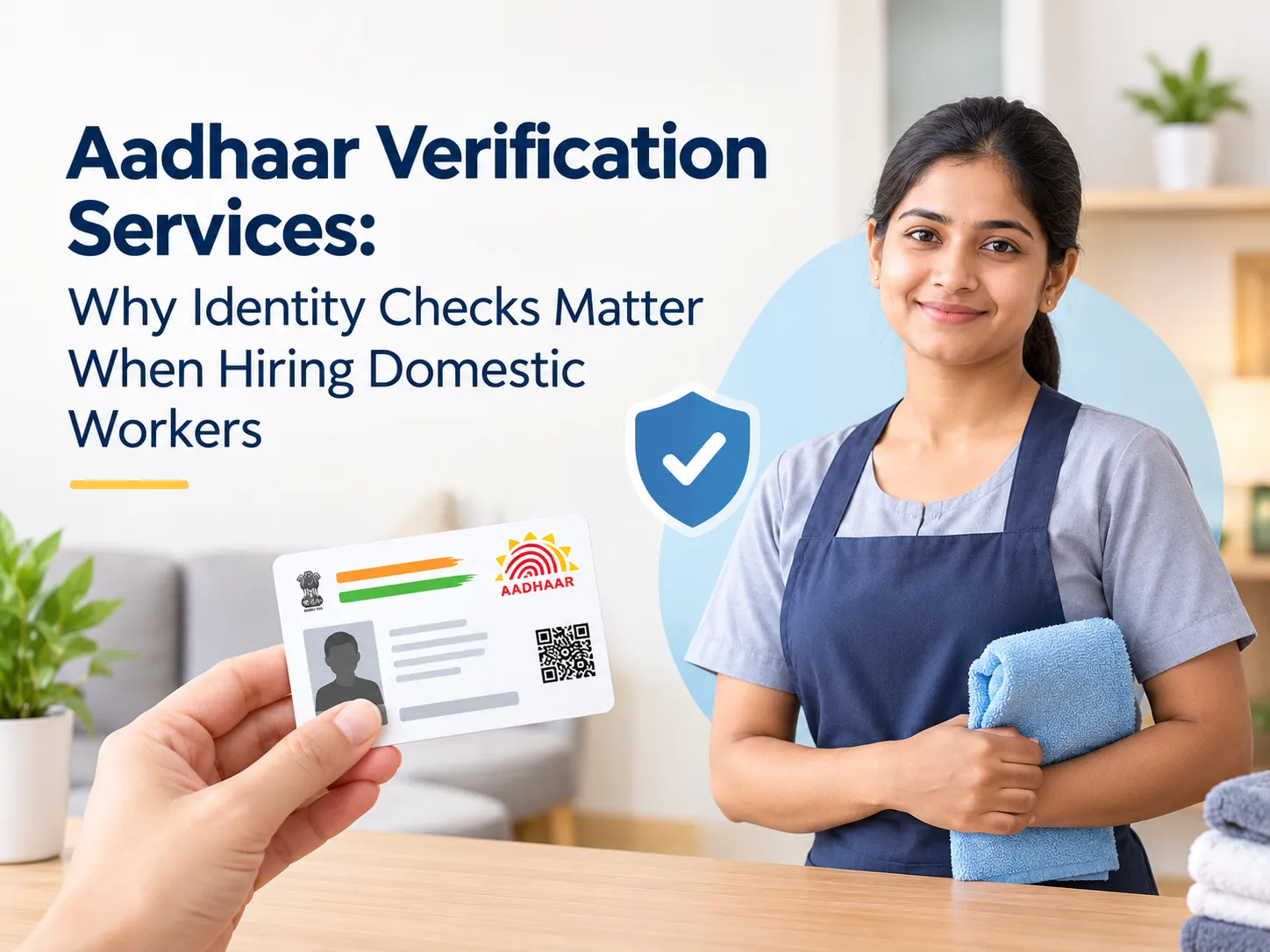
If you plan to Find a Maid Online, checking the person's identity and background should be an important part of the hiring process. Hiring a maid, nanny or driver can make everyday life much easier. A domestic worker can help with household chores, take care of children, or manage daily travel. However, inviting someone into your home or trusting them with your family also comes with responsibility. Before finalising a hiring decision, it is important to know who the person is and whether the information they provide is genuine.
Many families hire domestic workers through personal references, neighbours, friends, or online platforms. Although recommendations can be helpful, they do not always confirm a person's identity or residential details. This is why employers should take reasonable steps to verify the information shared during the hiring process.
Identity checks can help families make more informed hiring decisions, maintain proper records, and reduce the risk of identity-related misunderstandings. Understanding how these checks work can make the hiring process more organised and responsible.
Why Identity Verification Matters When Hiring Domestic Workers
Domestic workers may regularly enter your home, interact with family members, handle household belongings, or care for children and elderly people. Knowing who you are hiring is therefore an important part of responsible employment.
Here are some reasons why identity checks matter.
1. Confirming the Person's Identity
During the hiring process, a worker may provide personal information such as their name, age, and address. Checking an appropriate identity document helps employers confirm that the details provided are consistent with the document.
This is particularly useful when hiring someone through an unfamiliar contact or an online source. It also helps maintain accurate employment records.
However, employers should remember that an identity document alone does not establish a person's character, honesty, or suitability for a particular job.
2. Keeping Household Records Organised
Maintaining basic employment records can help avoid confusion later. These records may include the worker's name, agreed responsibilities, contact information, joining date, working hours, and emergency contact details, where appropriate.
Accurate records are useful when managing salary payments, communicating changes in work schedules, or resolving misunderstandings about employment arrangements.
Personal information should be collected only when necessary and stored securely. Employers should not keep unnecessary copies of sensitive documents or share them with unauthorised people.
3. Making Hiring Decisions With Greater Confidence
Hiring someone for the first time can feel uncertain, especially when the worker will be responsible for children, elderly family members, or household tasks while other family members are away.
An identity check is one practical step that can make the process more structured. Employers can also speak with previous employers, discuss job expectations clearly, and check references with the person's permission.
Using several reasonable checks provides a better basis for making a hiring decision than relying on a single document or verbal recommendation.
4. Reducing the Risk of Incorrect Information
Sometimes, personal details shared during hiring may be incomplete, outdated, or inconsistent. Checking documents and confirming relevant details can help identify discrepancies before the employment arrangement begins.
If something does not match, employers should ask the person for clarification rather than immediately making assumptions. Genuine errors can occur, and every individual should have an opportunity to explain them.
The purpose of verification should be to establish accurate information, not to discriminate against workers because of their background or financial circumstances.
What Is Aadhaar Verification and How Does It Work?
Aadhaar is an identity number issued by the Unique Identification Authority of India (UIDAI). Depending on the method used, Aadhaar-related verification can help establish whether the identity details presented by an individual are consistent with the applicable verification records.
When hiring a domestic worker, an employer may ask whether the person is willing to complete an appropriate identity verification process. The worker should understand why the information is required and how it will be used.
The process may involve the following steps:
-
Requesting appropriate identification: Explain which identity details are needed and why they are relevant to the hiring process.
-
Obtaining informed consent: Use an authorised verification method and obtain the person's consent wherever required.
-
Checking the details: Follow the applicable verification procedure to confirm the information that the method is designed to establish.
-
Reviewing discrepancies: If the details do not match, ask for clarification and allow the individual to correct genuine mistakes.
-
Maintaining necessary records: Record the verification outcome only to the extent needed for a legitimate purpose, using appropriate security measures.
Employers should not assume that simply looking at an Aadhaar card proves that every detail is authentic. They should also avoid collecting or storing Aadhaar numbers unnecessarily. Where appropriate, alternatives such as a masked Aadhaar document or another permitted identity document may be considered.
It is important to understand that Aadhaar verification does not automatically confirm a person's current address, criminal history, employment history, or trustworthiness. Those matters require separate checks where appropriate and legally permissible.
How Address Verification Helps During Hiring
Knowing a worker's residential details can be useful for maintaining employment records and communicating when necessary. However, the address written on an identity document may not always be the person's current residence.
For example, a domestic worker may have moved to another locality for work, may be living in rented accommodation, or may be staying temporarily with relatives. These situations do not automatically indicate a problem.
Employers who need to confirm residential information can explore Address Verification Services to understand the available methods for checking an address, subject to consent, applicable laws, and the provider's verification procedures.
Depending on the circumstances, the process may involve reviewing appropriate supporting documents or confirming information through an authorised method. The exact procedure and level of confirmation can vary.
Employers should explain why address details are needed, avoid intrusive enquiries, and respect the worker's privacy. A person's current living arrangement should not be treated as proof of reliability or unreliability.
Other Checks to Consider Before Hiring a Domestic Worker
Identity verification is useful, but it should form only one part of the hiring process. Families can take several additional steps to understand whether a worker is suitable for the role.
Check References Where Possible
If the worker has previous employment experience, ask whether they can provide a reference from a former employer. With the person's permission, contact the reference to discuss relevant work experience, attendance, responsibilities, and general suitability.
References should be considered fairly, and employers should avoid relying on unverified rumours.
Discuss Previous Experience
Ask about the person's experience with the specific responsibilities involved in the job. For example, a nanny may need experience caring for young children, while a caregiver may need familiarity with particular daily assistance tasks.
Discussing experience helps both parties understand expectations before employment begins.
Verify Background Information Responsibly
Where a background check is necessary, use a lawful and appropriate process with the required consent. Criminal record checks, where available and permitted, are different from identity checks and should be conducted through suitable channels.
Do not assume that an identity document or a reference alone establishes a person's complete background.
Agree on Salary and Responsibilities
Before the worker starts, discuss salary, working hours, weekly days off, duties, overtime arrangements, and leave expectations. Both parties should understand what has been agreed upon.
Clear communication reduces the likelihood of disputes and supports a respectful working relationship.
Keep Emergency Contact Details When Appropriate
For roles involving regular access to the household or responsibility for family members, maintaining a suitable emergency contact can be helpful. Explain why this information is needed and keep it confidential.
Common Mistakes Employers Should Avoid
Even when families understand the importance of identity checks, a few common mistakes can make the process less effective.
-
Relying only on personal recommendations: A reference can be helpful, but it does not replace appropriate identity checks.
-
Assuming Aadhaar proves everything: It does not independently establish criminal history, current residence, or personal character.
-
Collecting excessive personal information: Request only the information necessary for a legitimate purpose and protect it from unauthorised access.
-
Ignoring mismatched details: Ask for clarification when information differs instead of making immediate judgments.
-
Treating workers unfairly: Verification should be conducted respectfully and consistently, without discrimination based on a person's background or living situation.
A fair process protects the household's interests while respecting the dignity and privacy of the person seeking employment.
How Helper4u Can Help Families Find Domestic Workers
Finding a suitable domestic worker involves more than identifying someone who is available. Families also need to consider the person's experience, the nature of the work, salary expectations, and compatibility with household requirements.
Helper4u is a platform that helps households connect with domestic workers for different needs, including maids, cooks, babysitters, nannies, and caregivers. It can help employers explore suitable options according to their requirements.
Before finalising a hire, families should discuss the job clearly, confirm relevant details, and carry out appropriate checks based on the role. Employers should also clarify which verification steps have actually been completed rather than assuming that every candidate has undergone every type of background check.
Combining a suitable hiring platform with careful communication and responsible verification can help families approach the process with greater clarity.
Conclusion
Hiring a domestic worker requires trust, clear communication, and sensible precautions. Confirming identity details can help households maintain accurate records and make more informed decisions, particularly when hiring someone they do not already know.
However, identity checks should not be treated as a guarantee of safety or a substitute for references, appropriate background checks, and clear employment arrangements. Employers should also respect privacy, obtain consent where required, and avoid collecting unnecessary personal information.
By following a fair and organised hiring process, families can build better working relationships while giving domestic workers the respect and consideration they deserve.
Frequently Asked Questions
1. Is Aadhaar verification necessary when hiring a domestic worker?
It is not universally mandatory for every domestic hiring arrangement. Employers should consider applicable laws, the purpose of verification, consent requirements, and permitted alternatives.
2. Does Aadhaar verification confirm a person's criminal record?
No. It is an identity-related check and does not independently establish criminal history. Any necessary background check requires a separate, appropriate process.
3. Can an Aadhaar address be different from a worker's current address?
Yes. A person may have moved since their Aadhaar details were last updated. Current residential information may need to be confirmed separately, with consent and through appropriate methods.
4. What other checks should employers consider?
Depending on the role, employers may check references, discuss previous experience, confirm relevant contact details, and arrange lawful background checks where appropriate.
5. How can families find domestic workers through Helper4u?
Families can explore domestic worker options through Helper4u and discuss job requirements, experience, salary, and relevant verification steps before finalising a hiring decision.
Related Reading
Expert Insights: Navigating the Complex World of Home Improvement
Welcome to our in-depth exploration of Home Improvement. In an era defined by ra...
Why Home Improvement is Transforming the Global Industry Landscape
Welcome to our in-depth exploration of Home Improvement. In an era defined by ra...