Your Basement Floor Deserves Better Than Bare Concrete: A Homeowner's Guide to Basement Floor Coatings in Iowa
24 Views
Walk into a lot of Iowa basements and the floor gives itself away. There is a gray, chalky surface, a few hairline cracks, maybe a dark patch near the water heater or a rusty ring where something sat too long. The rest of the room might be finished nicely, yet the floor still feels like an afterthought.
A coating can change that. It seals and protects the concrete, cleans up the look, and makes the space easier to use for a workout area, playroom, workshop, or storage. This guide explains how basement floor coatings work, what options exist, what to check before you start, and how to choose from the contractors and installers available to you.
Why Bare Basement Concrete Struggles
Concrete is porous, and basements add a few extra challenges:
- Moisture. Basement slabs sit against the ground, so they can hold and release moisture more than an upper-level floor.
- Dust. Untreated concrete slowly sheds fine powder that settles on everything.
- Staining. Oil, rust, paint, and cleaning products soak in and are hard to remove.
- Temperature. Concrete stays cold, which can make a basement feel less inviting.
- Cleaning. A rough, unsealed surface traps dirt and is harder to mop.
A coating will not fix every one of those problems, but it can address several of them, particularly dust, staining, and cleanability.
What a Basement Floor Coating Does
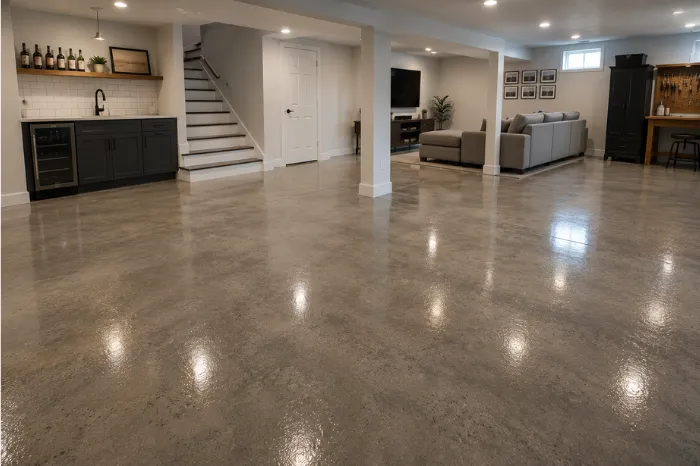
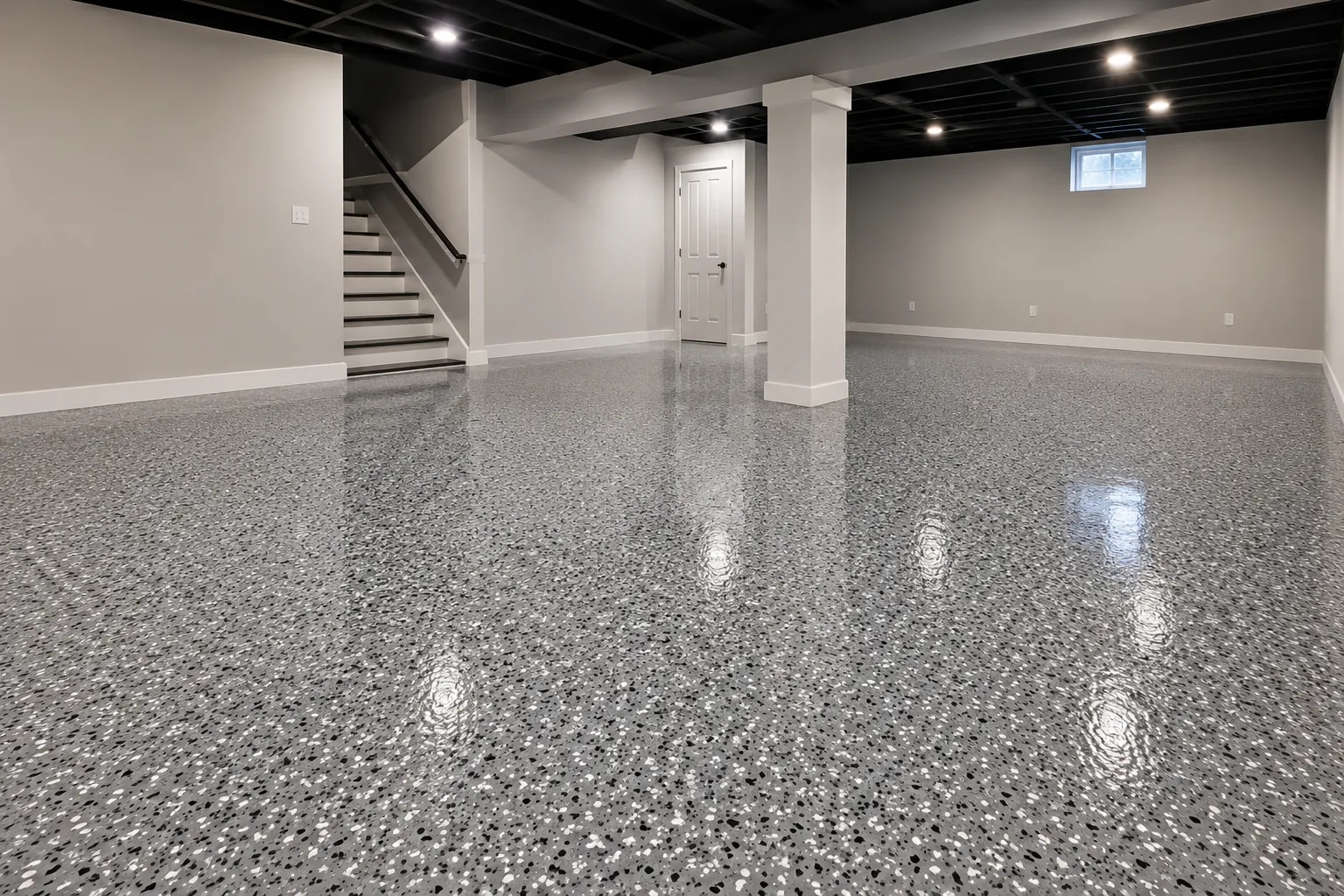
A basement floor coating is a protective layer applied over prepared concrete. It bonds to the slab, seals the surface, and creates a finished floor that resists spills and wipes clean. Many systems add decorative flakes or color for a more polished look and a bit of grip underfoot.
It helps to be clear on what it does not do. A coating is not a waterproofing system. If water is actively coming through the floor or walls, the source needs to be addressed first, since trapped moisture can cause a coating to bubble or peel. A reputable installer will ask about past leaks and look at the space before recommending anything.
Basement Floor Coating Options
There is no single best product. The right pick depends on the slab, the moisture level, the budget, and how you plan to use the room.
Polyurea and polyaspartic coatings. These cure quickly, resist moisture and stains, and are flexible enough to move with the concrete. They usually need professional installation and cost more up front. Fortress Floors of Iowa, for example, focuses on polyurea floor coatings, with installations that can be ready for use within a day.
Epoxy coatings. Epoxy has a long track record and usually costs less. It cures more slowly and forms a harder film. Because basements see little sunlight, the yellowing that can affect epoxy in sunny garages is less of a concern.
Concrete stain and sealer. This route gives a natural, variable look and suits sound concrete in a finished space. It is a lighter-duty option than a full coating, and results depend on the concrete.
Polished concrete. Grinding and polishing the slab produces a hard, reflective surface without adding a layer on top. It works best on solid concrete with limited moisture issues.
Paint. Concrete paint costs the least and is easy to apply, but it generally wears faster in traffic and can peel over time.
Ask each contractor which option they recommend for your floor and why, then compare their reasoning as much as their price.
Preparing the Slab Comes First
Good results depend on preparation more than on any product. A thorough installer will:
- Inspect the floor for cracks, pitting, old coatings, and signs of moisture.
- Test for moisture when needed, since high levels can affect adhesion.
- Clear and clean the space, removing dirt, grease, and debris.
- Repair cracks and damage so the surface is sound.
- Grind the concrete to open the surface and help the coating bond.
- Apply the coating system according to the manufacturer's instructions.
Fortress Floors of Iowa describes its process as beginning with a call and a free evaluation and quote, followed by crack repair and grinding before coating. Steps like these are what you want to hear about from any company you consider.
Existing conditions can change the plan. A slab with persistent moisture, heavy cracking, or old glued-down flooring may need extra work or a different approach. Be cautious of anyone who promises a flawless result without seeing the floor.
What Iowa Basements Need to Think About
Local conditions shape how a basement floor performs.
- Seasonal moisture. Spring thaw and heavy rain can raise moisture levels in a basement. A floor that looks dry in January may behave differently in April.
- Cold slabs. Winter chill comes up through the concrete. A coating will not insulate, though rugs or a subfloor layer can help if warmth matters.
- Older homes. Concrete in older Iowa houses may be uneven, patched, or covered in old paint or adhesive, all of which affect preparation.
- Use of the space. A laundry room, home gym, and workshop each call for a different level of toughness and traction.
Ask any installer how they handle moisture and whether they recommend testing before work begins.
How to Choose Basement Floor Coating Contractors
Since so much of the work is invisible once it is finished, the contractor you pick makes a big difference. Look for:
- Preparation experience. Ask how they grind, repair cracks, and deal with moisture.
- Product knowledge. They should explain the system they recommend and the reasons behind it.
- A clear process. You should know the steps, the timeline, and when the room can be used again.
- Honest limits. A good installer will point out what a coating can and cannot do in your basement.
- Written details. Scope, materials, colors, price, and warranty terms belong on paper.
- Local familiarity. Companies that work in Iowa understand the conditions basements face here.
- Independent reviews. Read them, and ask for references you can contact.
When comparing basement floor coating companies, get two or three written quotes and look beyond price. Check what preparation is included, what product is used, and what happens if something goes wrong.
If you would like to see how one Iowa provider approaches the work, you can explore basement floor coating services in Iowa from Fortress Floors of Iowa, which serves Iowa and southwest Wisconsin and offers free estimates.
Living With a Coated Basement Floor
Routine care is simple:
- Sweep or dust mop regularly
- Mop with mild soap and water
- Wipe up spills promptly
- Avoid harsh solvents and abrasive pads
- Use furniture pads and avoid dragging heavy items
A coated floor is easier to keep clean than raw concrete, though it is not maintenance-free.
Frequently Asked Questions
What are basement floor coatings?
Basement floor coatings are protective layers applied over concrete to seal it, resist stains, and create a finished, easy-to-clean surface. Common types include polyurea, polyaspartic, and epoxy. The result depends on how well the concrete is prepared.
Can you coat a basement floor?
Yes, in most cases, as long as the concrete is sound and moisture is under control. A contractor should inspect the slab, and may test for moisture, before recommending a system. Active leaks should be fixed first.
Will a coating stop basement moisture?
Not by itself. A coating can resist moisture at the surface, but it is not a waterproofing solution for water coming from the ground or walls. Address the source of moisture before coating.
How long does it take to coat a basement floor?
It depends on the product and the condition of the slab. Fast-curing systems such as polyurea can sometimes be finished in a day or two, while other coatings take longer to cure. Your installer can give a timeline for their system.
What is the difference between coating and staining a basement floor?
Staining colors the concrete and leaves a natural look, usually with a sealer on top. A coating forms a thicker protective layer and can cover more imperfections. The better choice depends on the slab and how the room will be used.
What should I ask basement floor coating installers before hiring?
Ask how they prepare the floor, how they handle moisture, which products they use, how long the job takes, and what warranty applies. Get the answers in writing.
Related Reading
Expert Insights: Navigating the Complex World of Home Improvement
Welcome to our in-depth exploration of Home Improvement. In an era defined by ra...
Why Home Improvement is Transforming the Global Industry Landscape
Welcome to our in-depth exploration of Home Improvement. In an era defined by ra...