8 Reasons to Choose an Event Ticketing System for Online Ticket Sales
By Ticketor
8 Views
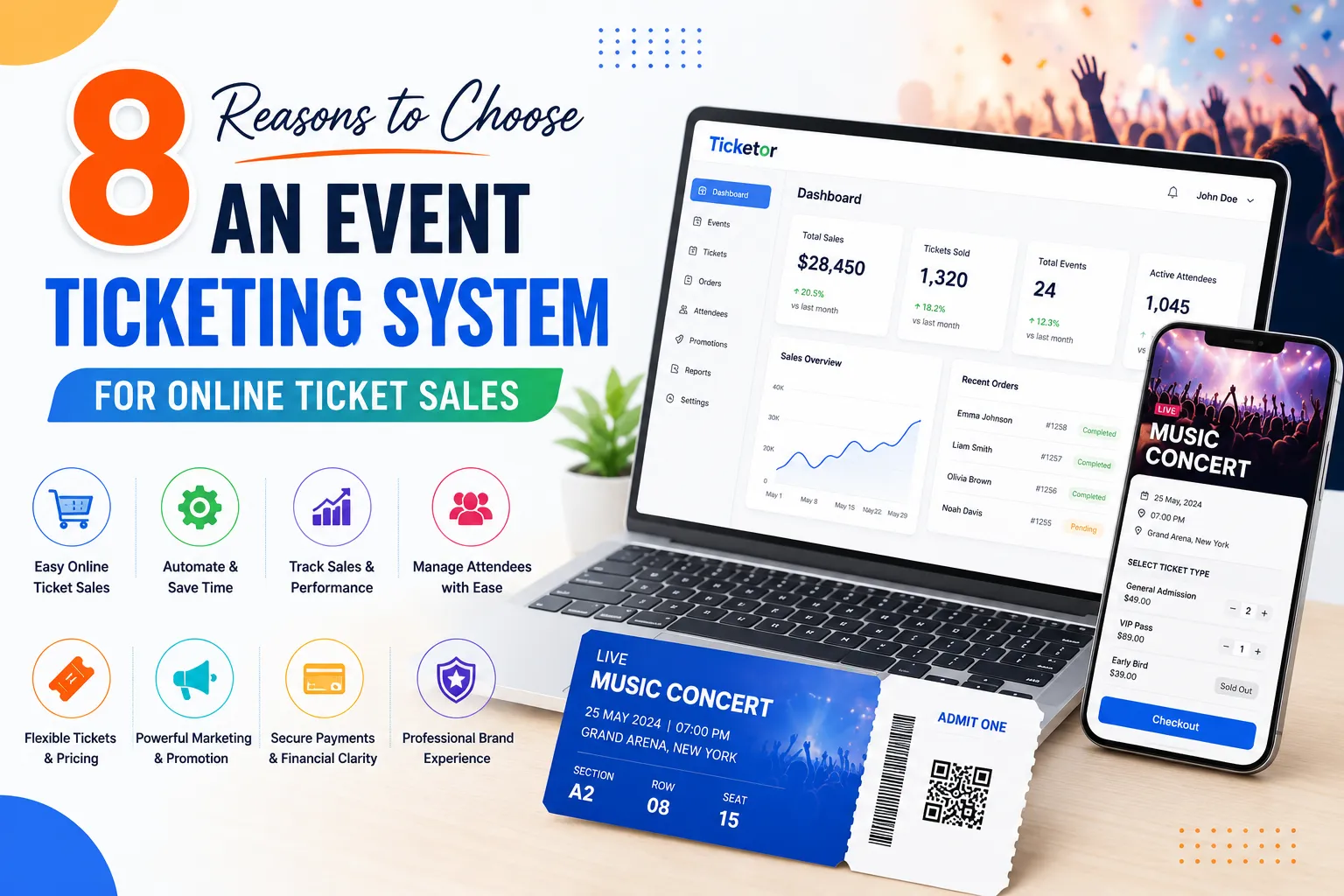
Organizing an event involves more than planning a venue, inviting guests, and creating an exciting experience. Event organizers must also manage ticket sales, payments, attendee information, promotions, and entry procedures. Handling these responsibilities manually can consume valuable time and increase the risk of mistakes. A reliable event ticketing system helps simplify these tasks by bringing important ticketing activities together in one convenient platform.
For concerts, festivals, conferences, school programs, fundraisers, and theater performances, an efficient ticketing process can make a noticeable difference. Moving ticket sales online also gives customers a convenient way to purchase tickets without visiting a physical box office or contacting organizers directly.
An online event ticketing system can help businesses improve accessibility, organize attendee information, and monitor sales more effectively. Below are eight important reasons why event organizers should consider adopting an online ticketing solution.
1. Make Ticket Purchasing Convenient for Customers
Convenience is one of the biggest advantages of selling tickets online. Customers often prefer purchasing tickets from their computers or mobile devices rather than traveling to a venue or waiting in a queue. Online purchasing allows them to explore event details, review available ticket options, and complete transactions whenever it suits them.
A streamlined purchasing experience can encourage potential attendees to complete their orders. Clear event information, straightforward checkout steps, and accessible payment options reduce unnecessary friction during the buying process.
Organizers can also share event pages through social media, email campaigns, and websites, helping interested audiences reach the ticket purchasing page more easily. When customers can discover and purchase tickets without complicated steps, the overall experience becomes more convenient.
2. Save Time by Automating Routine Tasks
Manual ticket management often involves maintaining spreadsheets, confirming payments, recording customer details, and responding to repetitive questions. These responsibilities become increasingly difficult as ticket sales grow.
An automated ticketing platform can reduce this workload by recording orders, issuing confirmations, and organizing transaction information. Depending on the platform's features, organizers can also manage ticket categories, set sales limits, and configure different ticket prices from a centralized dashboard.
Automation allows event teams to spend less time on repetitive administration and more time preparing programs, coordinating vendors, improving promotions, and assisting attendees. It also reduces the likelihood of errors caused by duplicate entries or inconsistent records.
For small teams and independent organizers, saving time can make event preparation more manageable without requiring additional administrative staff.
3. Track Ticket Sales and Event Performance
Understanding ticket sales is essential for making informed decisions. Without organized records, event planners may struggle to determine which ticket categories are selling well, how much revenue they have generated, or whether their promotional efforts are working.
A digital ticketing platform provides sales reports and useful performance data in one place. Organizers can review purchases, monitor remaining ticket inventory, and identify sales patterns as the event approaches. These insights help them understand customer demand and adjust their plans accordingly.
For example, if early-bird tickets sell quickly but standard tickets move slowly, organizers can evaluate their marketing messages, pricing, and promotional timing. Better visibility into sales activity makes it easier to identify opportunities and respond before small issues become larger concerns.
4. Simplify Attendee Management and Event Entry
Managing attendee information is another important responsibility, especially when hundreds or thousands of people are expected. Manually checking names against printed lists can create long queues and increase the risk of entry errors.
An online event ticketing system can issue digital tickets containing unique barcodes or QR codes. Staff members can scan these codes at the entrance to validate tickets and help prevent duplicate admissions. Electronic attendee records also make it easier to review registrations and prepare for expected attendance.
These capabilities are particularly valuable for concerts, conferences, festivals, and other events with busy entry points. Faster verification can improve crowd flow while giving staff more time to assist guests.
Organizers should select a solution with suitable scanning options, access controls, and attendee reporting features for their venue and event size.
5. Offer Flexible Ticket Types and Pricing
Different audiences may have different budgets, preferences, and purchasing needs. A flexible ticketing platform lets organizers create ticket categories that suit their event structure.
Options may include general admission, reserved seating, VIP packages, group discounts, early-bird offers, and special rates for selected audiences. For seated performances, interactive seating charts can allow customers to choose available seats before completing their purchases.
At Ticketor, organizers can explore ticketing features designed for different event formats, including assigned seating, multiple price levels, recurring events, and promotional codes. These options help businesses structure their offers according to their goals.
Flexible pricing also supports promotional campaigns. Organizers can reward early purchases, encourage group attendance, or offer limited-time discounts without maintaining separate manual records for every ticket category.
6. Strengthen Marketing and Reach More Customers
Even a well-planned event needs effective promotion to attract attendees. Sharing event information across multiple channels helps organizers connect with people who may be interested in attending.
A modern event ticketing system can support marketing activities through shareable event pages, email campaigns, discount codes, and social media integration. Some platforms also provide analytics that help organizers understand where visitors come from and which campaigns generate purchases.
These tools make it easier to coordinate promotions and direct interested customers toward the ticket checkout page. Organizers can also use clear event descriptions, photographs, schedules, and venue information to help potential buyers make confident decisions.
Consistent communication before an event can keep audiences informed about important updates, ticket availability, and upcoming programs. When marketing and ticket sales work together, event teams can manage their promotional efforts more efficiently.
7. Improve Payment Handling and Financial Visibility
Payment management plays a central role in online ticket sales. Customers expect a straightforward checkout process, while organizers need reliable transaction records and clear information about their revenue.
A suitable platform can support common payment methods and automatically associate transactions with ticket orders. Depending on its payment arrangements, it may also provide direct payouts, transaction reports, and information about refunds or cancellations.
Ticketor offers payment processing options and reporting tools intended to help organizers manage ticket revenue and review financial activity. Before selecting any platform, organizers should examine its transaction fees, supported payment methods, payout arrangements, and refund policies.
Transparent pricing matters because transaction costs can affect an event's overall budget. Comparing these details in advance helps organizers choose a solution that fits their financial requirements and avoids unexpected expenses.
8. Build a Professional and Consistent Brand Experience
Your event's ticketing page is often one of the first places customers interact with your organization. A professional presentation can help establish trust and provide a consistent experience from event discovery through checkout.
Custom branding, clear event details, and mobile-friendly pages make it easier to present an event professionally. Some platforms also let organizers use their own domain or incorporate ticket sales into an existing website.
Ticketor supports branded ticketing websites, allowing organizers to present events under their own identity. This can be useful for venues, promoters, educational institutions, and businesses that manage multiple events throughout the year.
A consistent experience helps customers recognize the organizer and find relevant information without unnecessary confusion. Combined with convenient purchasing and helpful communication, professional presentation can contribute to stronger customer relationships.
Conclusion
Online ticket sales offer event organizers practical ways to simplify administration, understand performance, improve entry management, and reach wider audiences. Choosing the right platform can reduce repetitive work while creating a smoother experience for both customers and staff.
The best online event ticketing system should match your event size, budget, payment requirements, marketing plans, and operational needs. By comparing available features and understanding the associated costs, organizers can select a solution that supports their immediate priorities and future growth. Ticketor is one option worth exploring when looking for an integrated approach to ticket sales and event management.
Frequently Asked Questions (FAQs)
1. What is an event ticketing system?
It is a digital platform that helps organizers create events, sell tickets, process orders, manage attendees, and monitor sales activity.
2. How does online ticketing benefit event organizers?
It makes purchasing more convenient, automates routine tasks, organizes attendee records, and provides useful sales information.
3. Can small businesses use online ticketing platforms?
Yes. Many platforms support small gatherings, community programs, fundraisers, and large public events.
4. What features should organizers compare before choosing a platform?
Consider payment options, pricing, ticket types, reporting, mobile compatibility, attendee management, marketing tools, and entry scanning.
5. Is digital ticket scanning useful for large events?
Yes. Barcode and QR-code scanning can speed up admission and help staff identify valid tickets while reducing duplicate-entry problems.