7 Common Signs Your Wisdom Tooth May Need Attention
By Abdus Salam
16 Views
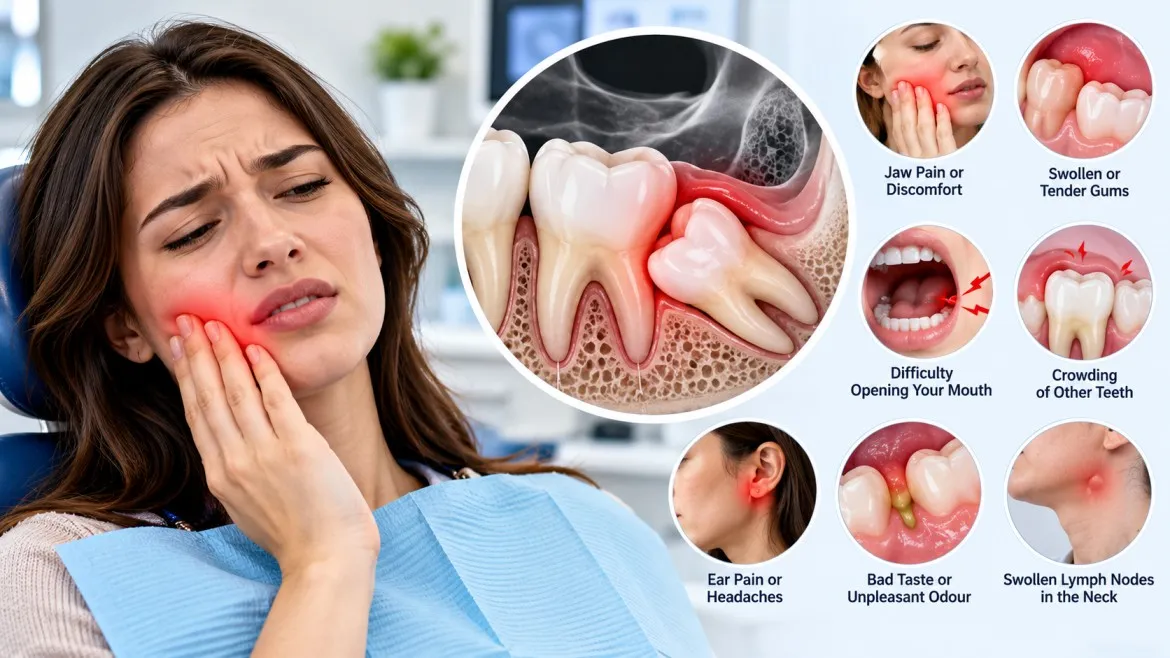
A wisdom tooth can develop without causing any noticeable problems, but it can also become difficult to clean or fail to erupt normally. When that happens, symptoms such as pain, swelling or repeated gum infections may develop.
Wisdom teeth are the last adult teeth to emerge and commonly appear during the late teens or early twenties. When there is not enough room for one to grow normally, it can become impacted, meaning it remains partly or completely trapped beneath the gum or in the jaw.
Understanding the warning signs can help you know when it is worth arranging a dental examination rather than simply waiting for the discomfort to disappear.
1. Pain at the Back of Your Mouth
One of the most noticeable signs of a wisdom tooth problem is pain around the very back of the mouth.
The discomfort may occur as the tooth attempts to erupt or when the surrounding gum becomes irritated. An impacted tooth can also put pressure on nearby structures or create an area where food and bacteria become trapped.
Pain does not automatically mean that a tooth needs to be removed. A dentist needs to assess the cause and determine the appropriate treatment.
2. Swollen or Tender Gums
Swelling around a partially erupted wisdom tooth is another sign that deserves attention.
When part of the tooth is covered by gum, food particles and bacteria can become trapped around the area. This may contribute to inflammation or an infection known as pericoronitis.
If the area repeatedly becomes swollen or painful, a professional dental examination can help identify the underlying cause.
3. Difficulty Cleaning the Area
The position of a wisdom tooth can make it challenging to brush and floss properly.
Because these teeth sit at the very back of the mouth, reaching around them can be difficult. If a tooth is only partially erupted, the surrounding gum can create an additional area where food debris accumulates.
Difficulty keeping the area clean does not necessarily mean extraction is required. However, it is a good reason to discuss the tooth with a dentist and ask how it should be monitored or cleaned.
4. Food Keeps Getting Trapped
Repeated food trapping around a wisdom tooth can become frustrating.
Food caught between the wisdom tooth and neighbouring tooth or beneath an overlying gum flap can contribute to plaque accumulation. Over time, this may increase the risk of decay or gum problems.
An impacted or partially erupted tooth may also affect the tooth next to it. If food consistently becomes stuck in the same area, mention it during your dental appointment.
5. Bad Taste or Unpleasant Breath
An unusual taste or persistent unpleasant breath can sometimes accompany inflammation or infection around a problematic wisdom tooth.
This can happen when bacteria and food debris accumulate around a partially erupted tooth.
These symptoms can have many other dental or non-dental causes, so they should not automatically be attributed to a wisdom tooth. A dentist can examine the area and determine what may be causing the problem.
6. Difficulty Opening Your Mouth
A troublesome wisdom tooth can sometimes be associated with jaw stiffness or difficulty opening the mouth comfortably, particularly when there is inflammation around the tooth.
If opening your mouth becomes increasingly uncomfortable, especially when combined with swelling, pain or feeling unwell, professional dental advice is appropriate.
Do not rely on home remedies alone when symptoms are becoming more severe.
7. Repeated Problems in the Same Area
Perhaps the clearest reason to have a wisdom tooth assessed is recurring trouble.
If the same area repeatedly becomes painful, swollen or difficult to clean, it may indicate that the tooth is not erupting normally or that there is an ongoing dental issue.
Importantly, not every wisdom tooth needs to be removed. If a wisdom tooth is healthy and not causing disease or other problems, it may be monitored instead.
What Causes Wisdom Tooth Problems?
A common issue is lack of space.
When there is insufficient room at the back of the jaw, a wisdom tooth may grow at an unusual angle or remain partially beneath the gum. This is known as impaction.
According to the Malaysian Ministry of Health clinical practice guideline, assessment and management of impacted third molars should take into account the clinical condition of the tooth and surrounding tissues.
Other potential problems include decay, gum disease, repeated infection and damage affecting nearby teeth.
Does Every Wisdom Tooth Need to Be Removed?
No.
The presence of a wisdom tooth does not automatically mean that extraction is necessary. If the tooth is healthy, symptom-free and can be appropriately monitored, a dentist may recommend keeping it under observation.
If the tooth is causing repeated infections, significant decay, damage to a neighbouring tooth or another dental problem, treatment options may be discussed.
The appropriate decision depends on an individual dental examination rather than symptoms alone.
What Happens During a Dental Assessment?
If you visit a dental clinic because of a troublesome wisdom tooth, the dentist will generally examine the area and assess the tooth's position and condition.
Dental X-rays may be recommended when the dentist needs a clearer view of the tooth's position, roots, surrounding bone or relationship to nearby teeth.
Depending on the findings, possible approaches may include monitoring, improving cleaning around the area, treating an infection or discussing removal.
When Should You Seek Urgent Dental Care?
Some symptoms should not be ignored.
Severe or worsening pain, significant swelling, fever, feeling generally unwell, persistent bleeding or difficulty swallowing can require prompt professional assessment.
If swelling is affecting breathing or swallowing, seek emergency medical care.
Why Regular Dental Check-Ups Matter
A wisdom tooth can sometimes cause problems before symptoms become obvious.
Routine dental examinations allow a dentist to monitor teeth and gums and identify changes that may require attention. This can be especially useful for partially erupted or impacted wisdom teeth.
Star Dental Clinic Bukit Mertajam 星牙科 provides a range of dental services, including wisdom teeth management, alongside braces, whitening, implants, crowns and bridges, root canal treatment, scaling, fillings and extractions.
Located at 95-G, Jalan Perniagaan Gemilang 1, Pusat Perniagaan Gemilang, Bukit Mertajam, Penang, the clinic provides dental services throughout the week.
Takeaway
A wisdom tooth does not always cause problems, but pain, swelling, repeated infections, food trapping, difficulty cleaning or jaw discomfort are reasons to arrange a dental assessment.
Rather than assuming that extraction is always necessary, a dentist can examine the tooth, assess its position and discuss whether monitoring or treatment is appropriate.
For patients in Bukit Mertajam looking for professional dental care, Star Dental Clinic Bukit Mertajam 星牙科 provides wisdom teeth management and a broad range of general and restorative dental services.
Frequently Asked Questions
What is a wisdom tooth?
A wisdom tooth is one of the last adult teeth to develop and is located at the back of the mouth. Some people have fewer than four, and some have none.
Does wisdom tooth pain always mean the tooth needs to be removed?
No. Pain can have different causes, and treatment depends on the condition and position of the tooth. Some healthy, symptom-free wisdom teeth can be monitored rather than removed.
What are common signs of a problematic wisdom tooth?
Pain, swollen gums, repeated infections, difficulty cleaning, food trapping, unpleasant taste and difficulty opening the mouth can be associated with wisdom tooth problems.
How does a dentist check a wisdom tooth?
The dentist can examine the mouth and may recommend dental X-rays to assess the tooth's position and surrounding structures.
When should I see a dentist about a wisdom tooth?
Arrange a dental assessment if you experience persistent or recurring pain, swelling, infection, difficulty cleaning the area or other unusual symptoms. Severe or worsening symptoms may require urgent attention.