5 kVA vs 15 kVA Diesel Gensets: How to Choose the Right Generator Set
By Brijmohan Goswami
3 Views
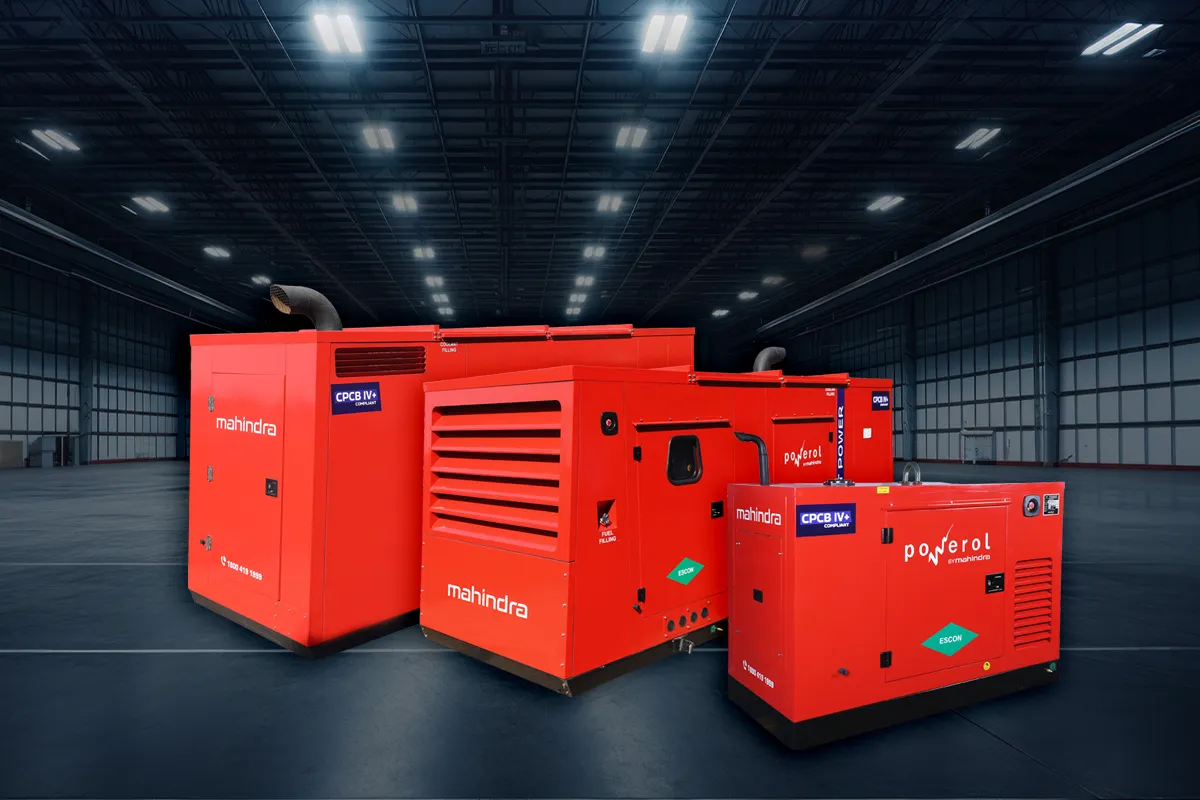
Power requirements can vary significantly between a small shop, an office, a mid-size bungalow, and a workshop. Choosing a genset that is too small can lead to overloading, while selecting one that is much larger than necessary can increase the amount of fuel burned and operating costs. This makes generator sizing an important decision.
For people comparing a 5 kVA Diesel Genset with a 15 kVA one, the right choice depends on the equipment you need to operate, starting loads, future requirements and the way the generator will be used.
Here is a practical guide to help you understand the difference and select the right option.
What Does kVA Mean in a Genset?
Before comparing capacities, it helps to understand kVA. Kilovolt-ampere (kVA) represents the apparent power capacity of a generator.
A 5 kVA genset can provide significantly less power than a 15 kVA genset. At a power factor of 0.8, a 5 kVA generator provides approximately 4 kW, while a 15 kVA generator provides approximately 12 kW.
However, these figures should not be treated as the only selection criteria. Actual power requirements depend on the equipment connected to the generator and the conditions under which it operates.
5 kVA vs 15 kVA: What's the Difference?
The simplest distinction is capacity.
A 5 kVA generator is generally suited to smaller and relatively predictable loads. It can be useful for small offices, retail outlets, homes, basic lighting systems, computers and selected appliances.
A 15 kVA generator, in comparison, provides more capacity. It can support larger offices, workshops, commercial spaces, pumps, refrigeration equipment and multiple electrical loads simultaneously, depending on the actual load profile.
For small offices and homes that need more backup power or greater room for expansion, 15 kVA diesel gensets can provide useful additional headroom.
1. Start With Your Total Running Load
The first step in choosing a genset is calculating the equipment you need to run during a power outage. Prepare a list of essential equipment and note its wattage or kW rating. This may include:
- Lights and fans
- Computers and networking equipment
- Air conditioners
- Refrigerators
- Water pumps
- Production equipment
- Compressors
- Security systems
Add the running loads to estimate your total requirement. For instance, if your essential equipment requires around 3 kW, a 5 kVA unit may be suitable depending on the equipment's starting requirements. If the requirement approaches 8–10 kW, a 15 kVA option may provide a more appropriate capacity.
2. Don't Ignore Starting Loads
Running power is not the only thing to consider when choosing a genset. Equipment such as air conditioners, pumps, compressors and workshop machines can need extra power when they start.
If the generator cannot handle this temporary increase, it may cause voltage drops, equipment shutdowns or overloads. So, even if a 5 kVA Diesel Genset seems suitable based on your regular power usage, it may not be enough for multiple motor-driven appliances.
Always consider both the running load and starting load before selecting a generator.
3. Consider Your Future Power Needs
Your electricity requirements may not remain the same. A small business may add air conditioners, computers, refrigeration equipment, or machinery over time.
If your current load is close to the practical limit of a 5 kVA generator, moving to a 15 kVA unit may provide useful capacity for future additions. However, oversizing should also be avoided. Buying a much larger generator simply for future possibilities can increase the initial investment and may result in inefficient operation at very low loads.
4. Think About Fuel Consumption
Generator capacity has a direct relationship with fuel requirements, but actual consumption depends on the engine, load, and operating conditions. A smaller generator generally consumes less fuel when appropriately loaded. However, the most economical option is not necessarily the one with the smallest capacity.
For example, operating a 5 kVA generator near its maximum capacity for long periods may be less practical than using a suitably sized 15 kVA model with adequate headroom.
The objective should be to match the genset to the actual load rather than simply choosing the smallest available model.
5. Evaluate the Application
The type of facility also influences generator selection. A small office with computers, lights, fans and basic equipment may require only a compact generator. A workshop with pumps, compressors and machinery will have different requirements.
For commercial and industrial users, 15 kVA diesel gensets can be useful when several loads need to operate together or when equipment has higher starting requirements. A proper load assessment is especially important where production, refrigeration or other critical systems depend on continuous backup power.
6. Consider Generator Quality and Support
Capacity is important, but the generator's engine, alternator, control system and service support also affect long-term performance. A Mahindra Powerol Diesel Genset, for example, can be considered by users looking for a reliable generator solution from an established power equipment brand.
Buyers should also evaluate service availability, spare parts, warranty terms, maintenance requirements and installation support before making a decision. Choosing a recognised manufacturer and an experienced supplier can make routine maintenance and troubleshooting easier over the generator's operating life.
5 kVA or 15 kVA: Which One Should You Choose?
There is no universal answer because every facility has a different load profile. Choose a 5 kVA Diesel Genset when:
- Your essential load is relatively small.
- Most equipment has predictable running requirements.
- You do not operate several large motors.
- Future power requirements are unlikely to increase significantly.
- Compact size and lower initial cost are priorities.
Consider a 15 kVA generator when:
- Your essential load is considerably higher.
- Several appliances or machines need to operate together.
- You have equipment with high starting loads.
- You expect your electricity requirements to increase.
- You need additional capacity for operational flexibility.
A 15 kVA diesel genset should not be selected simply because it offers more power. Similarly, a 5 kVA unit should not be chosen solely because it costs less. Correct sizing is the key to reliable and economical operation.
Conclusion
The choice between a 5 kVA and 15 kVA generator should always begin with your actual power requirements. Calculate running loads, account for motor starting requirements, consider future expansion, and evaluate fuel efficiency before making a decision.
For smaller and predictable applications, a 5 kVA Diesel Genset may be enough. For larger loads, motor-driven equipment or facilities requiring additional capacity, a 15 kVA solution may be more appropriate.
ESCON Gensets offers generator solutions for different applications and power requirements. Before investing, assess your load carefully and choose a generator that can deliver reliable backup power without unnecessary capacity or cost.
FAQ’s
1. What is the main difference between 5 kVA and 15 kVA gensets?
The primary difference is their power capacity. A 5 kVA genset suits smaller loads, while a 15 kVA model can support larger requirements and multiple appliances or equipment.
2. How does ESCON help choose between 5 kVA and 15 kVA gensets?
ESCON can help assess running loads, starting requirements, equipment type and future power needs. This makes it easier to select a genset capacity that matches your application.
3. Is a 5 kVA genset suitable for equipment with motors?
It can be, depending on the motor's starting requirement and the total connected load. ESCON recommends considering both running and starting loads before selecting a suitable genset capacity.
4. When should I consider a 15 kVA diesel genset?
A 15 kVA genset can be suitable when several appliances operate together, starting loads are higher, or future power requirements may increase. ESCON can help assess the application before selection.
5. Why is correct genset sizing important?
Correct sizing helps prevent overloading while avoiding unnecessary capacity and operating costs. ESCON helps businesses evaluate their power requirements to select a generator that balances performance and efficiency.