3PL Logistics Company in India: Why Inventory and Transportation Must Work Together
11 Views
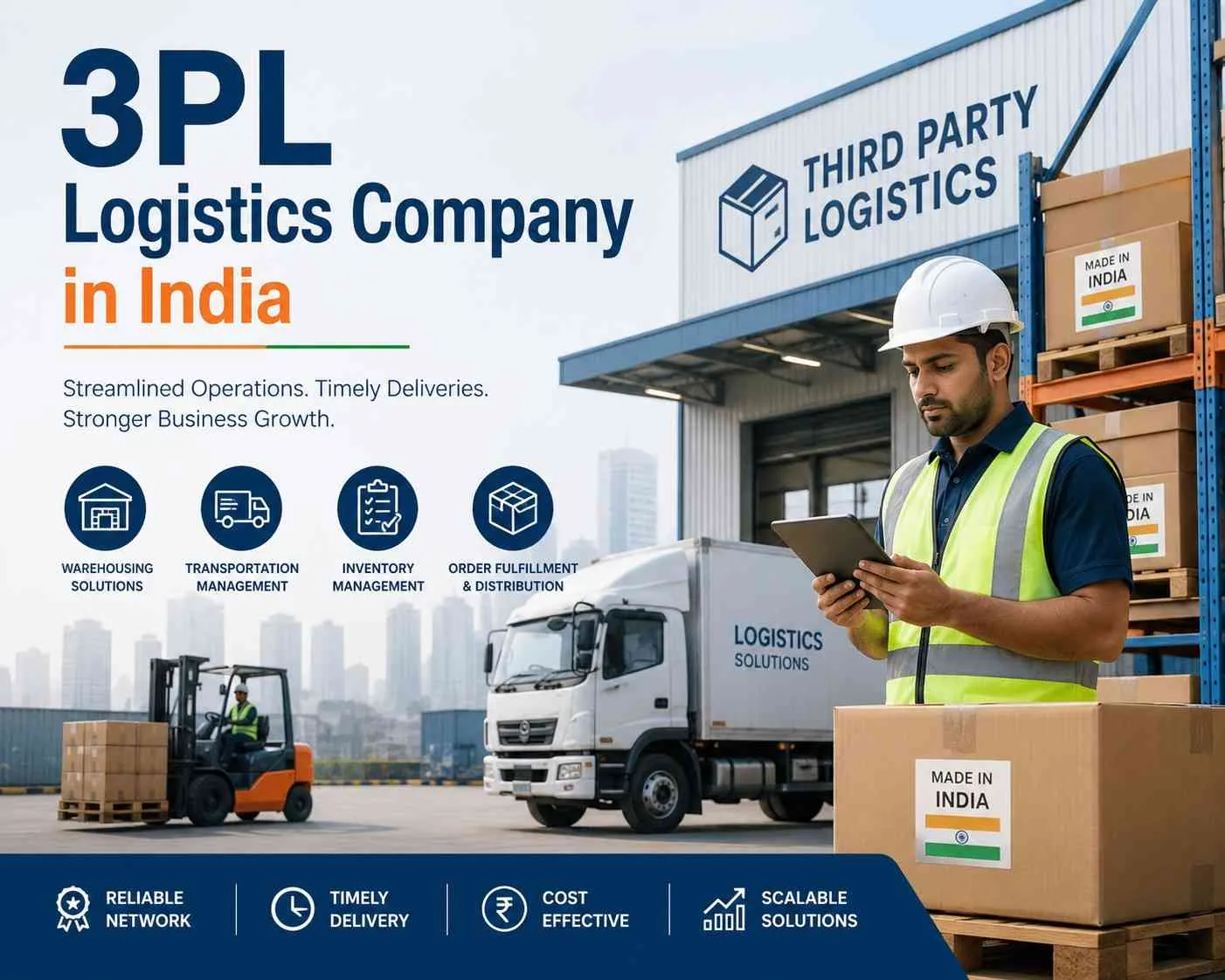
A business can have enough stock, sufficient warehouse space, and transporters available, yet still struggle to fulfil orders on time. The problem is often not a shortage of resources. It is the gap between inventory decisions and the movement of goods. A 3pl logistics company in India can help address this gap when its role is designed around how stock is received, stored, allocated, dispatched, and replenished.
For logistics professionals, this distinction matters. A warehouse team may prepare an order based on available inventory, while the transport team plans vehicles around dispatch volume. If these decisions happen independently, orders can remain packed but unshipped, vehicles can wait for cargo, and stock can reach the wrong location at the wrong time.
In reality, logistics performance depends on how well these activities connect. Outsourcing individual tasks may reduce the internal workload, but it does not automatically create a better operating process.
Why a 3PL Logistics Company in India Must Understand Inventory Movement
Inventory is often treated as a warehouse responsibility, while transportation is handled by a separate team. That division may be convenient for reporting, but it can create practical problems on the ground.
Consider a distributor supplying products to several regional warehouses. One location is running short of fast-moving stock, another has excess inventory, and a third has an incoming supplier shipment scheduled for the same week. If the logistics team sees only individual transport requests, it may arrange several separate movements without considering the wider inventory position.
The result is unnecessary handling, poorly timed replenishment, or stock sitting in one location while another location struggles to fulfil orders.
This is where inventory management logistics services become relevant. The objective is not simply to count products or maintain warehouse records. It is to connect stock availability with the decisions that determine where goods should move next.
A logistics provider needs to understand the difference between inventory that is physically present and inventory that is actually available for dispatch. Goods may be awaiting inspection, allocated to existing orders, held because of documentation, or stored in a location that cannot support the required dispatch schedule.
These details can change the transport plan completely.
A useful operating arrangement gives warehouse and transport teams a shared view of order priorities, stock status, dispatch readiness, and expected receiving times. It also defines who acts when those details change. Without that clarity, even a sophisticated tracking system can end up documenting problems rather than preventing them.
When End-to-End 3PL Logistics Services Solve the Right Problem
The term end-to-end 3pl logistics services can suggest that one provider should manage every activity from supplier collection to final delivery. In practice, the right scope depends on where the business is experiencing operational friction.
A manufacturer may already run its warehouse efficiently but struggle with regional distribution. Another business may have reliable transport arrangements yet face repeated stock discrepancies, delayed order preparation, and poor dispatch visibility. Both may need third-party logistics support, but they do not necessarily need the same solution.
The first business might benefit from transportation planning and delivery coordination. The second may need a closer connection between inventory records, warehouse execution, and dispatch scheduling.
This is why logistics teams should identify the underlying problem before deciding what to outsource. Otherwise, a company can end up paying for a broad service package while the original bottleneck remains unresolved.
Take a common situation: a customer order is confirmed, but the warehouse discovers that the stock is spread across different storage locations. Picking takes longer than expected, the vehicle arrives before the goods are ready, and the dispatch misses its planned departure. The transport delay is visible, but the actual problem started inside the warehouse.
A transport-only solution will not fix that issue. Better order release rules, stock-location accuracy, and coordination between warehouse preparation and vehicle scheduling are more likely to help.
Good third-party logistics management considers the entire sequence. It asks what must happen before a shipment is ready, what information the next team needs, and what should happen if one stage falls behind.
That is the practical difference between outsourcing activities and improving the logistics process.
Affordable 3PL Logistics Solutions Depend on How Work Is Organised
Businesses often compare logistics providers using a rate card. The quoted price matters, of course, but it tells only part of the story.
A lower transportation rate may be offset by additional storage, repeated handling, waiting charges, failed delivery attempts, or extra administrative work. Likewise, an inexpensive warehousing arrangement may become costly if inventory is difficult to locate or orders require excessive movement within the facility.
For this reason, affordable 3pl logistics solutions should be assessed against the total cost of completing the required operation.
Suppose a business dispatches goods to the same destinations several times each week. If orders are released at inconsistent times, warehouse staff may prepare cargo in separate batches and vehicles may arrive before the loads are ready. The company then pays for an inefficient sequence of activities, even if every individual service has a reasonable price.
A more useful approach is to review the complete workflow. Can order cutoffs be aligned with warehouse capacity? Can recurring dispatches be planned around actual shipment patterns? Can stock be positioned closer to predictable demand without creating excess inventory elsewhere?
These decisions require cooperation between inventory planning, warehousing, and transport operations. They may not produce an immediate saving on every consignment, but they can reduce avoidable work across the network.
Honestly speaking, the smallest recurring inefficiencies are often the easiest to overlook because no single incident appears expensive. Over a month, however, repeated vehicle waiting, duplicate handling, and manual status checks can consume meaningful time and resources.
A logistics review should therefore measure both direct expenditure and the effort required from internal teams to keep shipments moving.
How to Evaluate a Third Party Logistics Service Provider
Choosing a third party logistics service provider should begin with actual operating data, not a general presentation of capabilities.
Logistics teams should examine order volumes, stock movement, dispatch frequency, receiving constraints, delivery exceptions, and the amount of manual intervention required. These details establish a baseline against which a proposed arrangement can be evaluated.
The next step is to test how the provider would handle real situations. What happens when inventory records do not match the physical count? How are urgent orders prioritised without disrupting planned dispatches? Who is responsible when the warehouse is ready but a vehicle is delayed? How are failed deliveries recorded and rescheduled?
The answers reveal whether the provider has a clear operating method or relies heavily on informal communication.
Before finalising an arrangement, assess the following areas:
-
Inventory visibility: Can the business understand stock availability, allocation, and dispatch readiness?
-
Operational responsibility: Are warehouse, transport, and customer communication responsibilities clearly assigned?
-
Exception handling: Is there a defined process for discrepancies, delays, and failed deliveries?
-
Performance reporting: Can both parties review recurring issues and identify their causes?
-
Scalability: Can the process accommodate higher volumes without depending on constant manual intervention?
A pilot involving a defined group of shipments or a specific distribution lane can also be useful. It allows the business to compare actual performance with the expected process before expanding the arrangement.
The goal is not to eliminate every exception. That is unrealistic in logistics. The goal is to make exceptions visible, manageable, and less likely to recur for the same reason.
What Will Shape 3PL Logistics Services in India in 2026?
The direction of logistics technology is moving beyond simply recording shipment status. Businesses increasingly need information that helps them decide what to do next.
Inventory systems, warehouse management software, transport management platforms, and tracking tools can each provide useful information. The challenge is connecting the data so that one team's decision does not create an avoidable problem for another.
For example, an inventory system may flag low stock at a regional warehouse. If that information reaches the logistics planner early enough, replenishment can be considered before the shortage affects customer orders. If the alert arrives only after the warehouse has run out, the business may need an urgent movement that costs more and disrupts planned dispatches.
Better forecasting and data integration can improve these decisions, but technology alone is not enough. Stock records must be accurate, operating responsibilities must be clear, and teams must act on the information they receive.
For 3pl logistics companies in India, the opportunity lies in connecting physical execution with useful operational visibility. Businesses need to know not only where goods are located, but also whether those goods are ready to move, when they are expected to arrive, and what action is needed if the plan changes.
This makes process discipline just as important as software. A dashboard cannot compensate for unclear ownership or inaccurate inventory information.
Conclusion
A 3pl logistics company in India can create value when it connects inventory decisions with warehouse execution and transportation planning. Simply transferring storage or delivery activities to an external provider does not guarantee that the wider supply chain will perform better.
Logistics teams should begin by identifying where goods become delayed, where stock is poorly positioned, and where employees spend too much time coordinating routine activities. Those findings help determine which functions should be outsourced and what performance improvements should be expected.
The strongest arrangement is one in which stock information, dispatch priorities, transport schedules, and exception handling support the same operational plan.
Before selecting a provider, map the current process, establish a measurable baseline, and test the proposed workflow against real shipment scenarios. That approach gives the business a clearer basis for comparing costs, assigning responsibility, and improving performance over time.
FAQs
1. What does a 3PL logistics company in India manage?
Ans. Depending on the agreement, a 3PL may manage transportation, warehousing, inventory handling, order fulfilment, distribution, and returns. Businesses should confirm the exact scope and responsibilities before onboarding a provider.
2. How do inventory management logistics services improve operations?
Ans. They connect stock availability with storage, replenishment, order preparation, and dispatch decisions. This can help businesses identify shortages earlier, reduce unnecessary stock movement, and improve the coordination of warehouse and transport activities.
3. How can businesses find affordable 3PL logistics solutions?
Ans. Compare the total cost of completing the operation, including transport, storage, handling, waiting time, and internal coordination. A lower quoted rate may not be economical if it creates additional work or repeated delivery problems.
4. What should businesses check before hiring a third party logistics service provider?
Ans. Review operational capabilities, inventory visibility, reporting, exception handling, responsibility boundaries, and the provider's ability to manage actual shipment scenarios. A limited pilot can help validate the proposed process before a larger commitment.
5. Are end-to-end 3PL logistics services suitable for every business?
Ans. Not necessarily. Some businesses need only transportation or warehousing support, while others benefit from a more integrated arrangement. The right scope depends on the company's existing capabilities, operational bottlenecks, and growth requirements.
Related Reading
Top 10 Hidden Secrets About Business & Finance You Need to Know
Welcome to our in-depth exploration of Business & Finance. In an era defined...
Why Business & Finance is Transforming the Global Industry Landscape
Welcome to our in-depth exploration of Business & Finance. In an era defined...